Start Your Week with Calm, Clear Puppy Goals
Puppy obedience training does not need to take hours or wear everyone out. Short, focused sessions of 2 to 5 minutes, sprinkled through your day, are more than enough for a young pup. When we keep things clear and calm, puppies learn faster and feel safer, and so do we.
For this 7-day plan, think about what would actually make life feel easier at home. It might be your puppy turning to you when you say their name, sitting before meals, or settling more easily in the evening. Pick two or three simple wins you would love to see by the end of the week and keep those in mind.
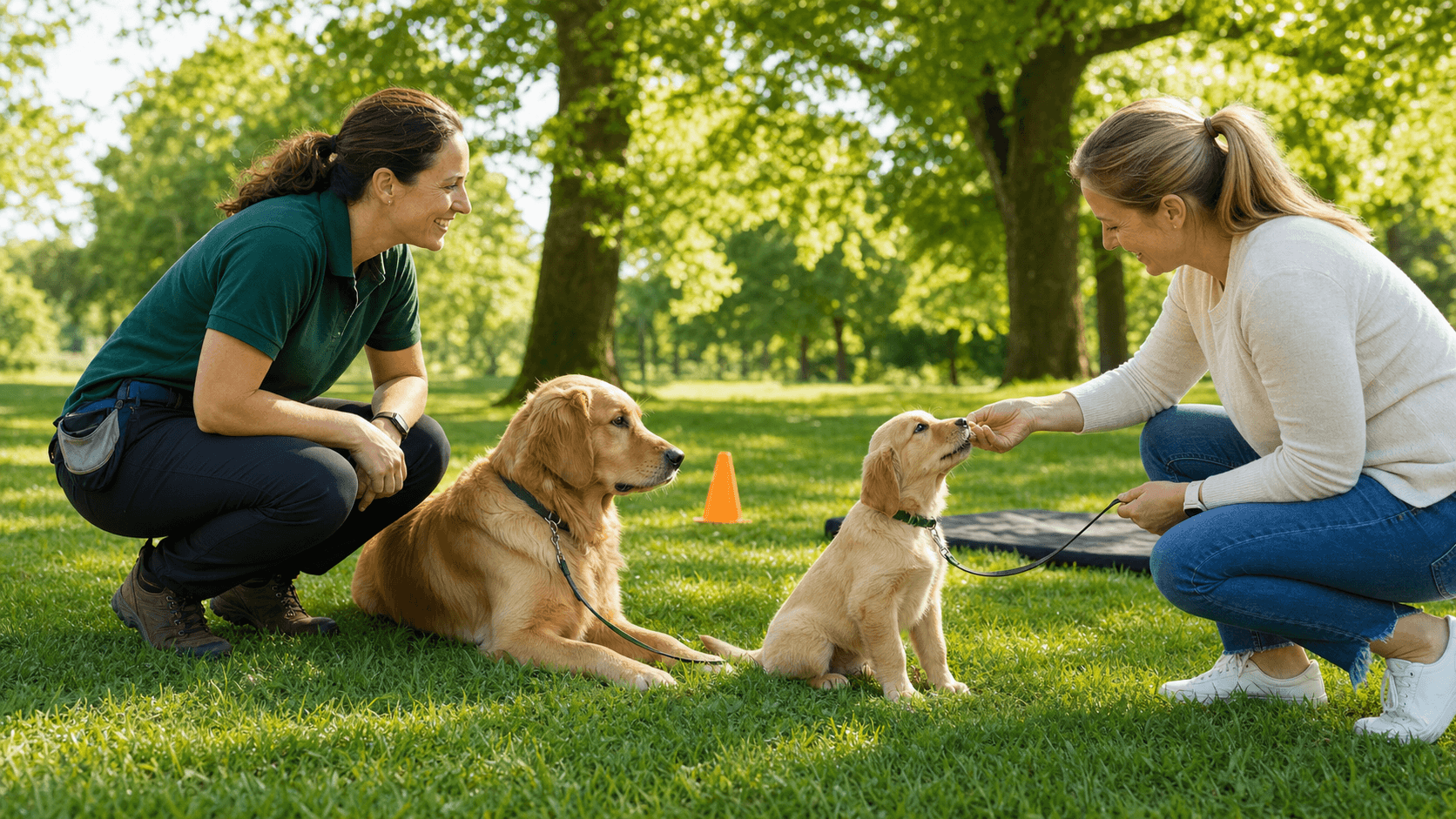
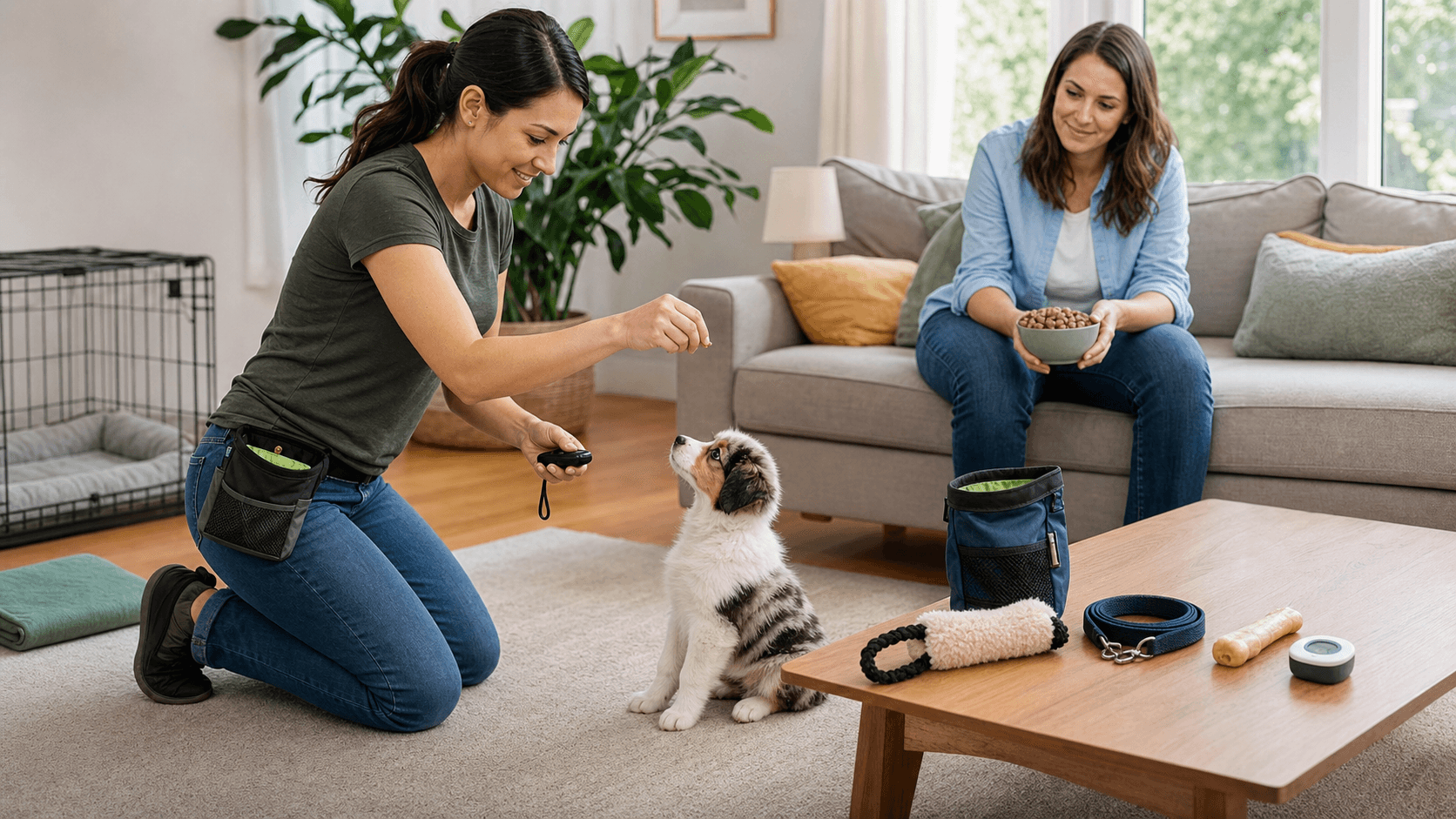
Gather a few basics before you start: soft, tiny treats, a lightweight lead, a comfy bed or mat, and a quiet space where there are fewer distractions. Late April is often mild, with longer bright evenings, so it is a great time to add very short outdoor sessions in the garden or a safe space outside without doing too much too soon.
A simple daily pattern works well:
- Morning: calm focus, toilet trips, name and sit
- Afternoon: play, recall games, more toilet trips
- Evening: gentle handling and settling on a mat
Days 1, 2: Laying Foundations with Name, Sit, and Toilet Trips
For the first two days, we keep things very simple. Each 2 to 5 minute session has one clear job: name, sit, or toilet habits. That is it. Many families near us in Westport and Ballycroy find that this keeps everyone relaxed and makes progress easier to see.
For name recognition:
- Say your puppy’s name once
- As they glance towards you, say a happy marker like “Yes!”
- Feed a treat close to your legs so they move in towards you
For sit:
- Hold a treat to your puppy’s nose
- Slowly lift it upwards and slightly back
- As their bottom touches the floor, mark “Yes!” and give the treat
Across the day, build a tiny routine:
- Morning: toilet trip, name game, then ask for a sit before breakfast
- Afternoon: toilet, name game indoors, gentle play with short breaks
- Evening: toilet, sit before dinner, short calm cuddle or quiet time
What should we ignore at this stage? Normal puppy clumsiness, brief whining when a session ends, or a bit of fidgeting while they try to work out what earns a treat. As long as they are not scared or frustrated, we can stay cheerful and carry on.
By the end of day 2, a good sign of progress is your puppy turning to their name in a quiet room most of the time, and being able to offer a brief sit when asked.
Days 3, 4: Adding Loose Lead, Settling, and Handling
Now we add a few new skills, still in tiny chunks. We are not doing long walks yet, only early loose lead habits indoors. Clip on the lightweight lead and walk around one room or hallway. Every step or two, when your puppy is by your side, mark “Yes!” and feed beside your leg.
If they rush ahead, just stop, wait a second, then invite them back into position. We want them to learn that staying near you is what makes good things happen, not pulling out front.
Next, we start a “settle on a mat” routine:
- Place the bed or mat on the floor
- Toss a treat onto the mat so your puppy steps onto it
- When they lie down or settle with a chew, quietly drop a few more treats close to them
At first, you may only get a few calm seconds. That is fine. Slowly grow that to 30 to 60 seconds of relaxed chewing or resting.
Handling is important for future vet visits and grooming. Keep these exercises very short. Touch a paw, feed a treat. Touch an ear, feed a treat. Lift the collar gently, feed a treat. The message is simple: when people touch you, nice things happen.
Ignore mild lead mouthing, brief fussing when you pause, or a small wriggle during handling if your puppy quickly settles again when the treats appear. By the end of day 4, you are looking for a few indoor steps beside you without pulling and a short settle on the mat with a chew.
Days 5, 6: Recall, Real-Life Manners, and What to Ignore
Now we shift the main focus of puppy obedience training to recall and everyday manners. These are the skills that make daily life feel smoother.
For recall, keep it bright and fun:
- Call your puppy’s name once in a happy voice
- Add a simple word like “Come!” as they start to move
- When they reach you, give several treats and maybe a quick game
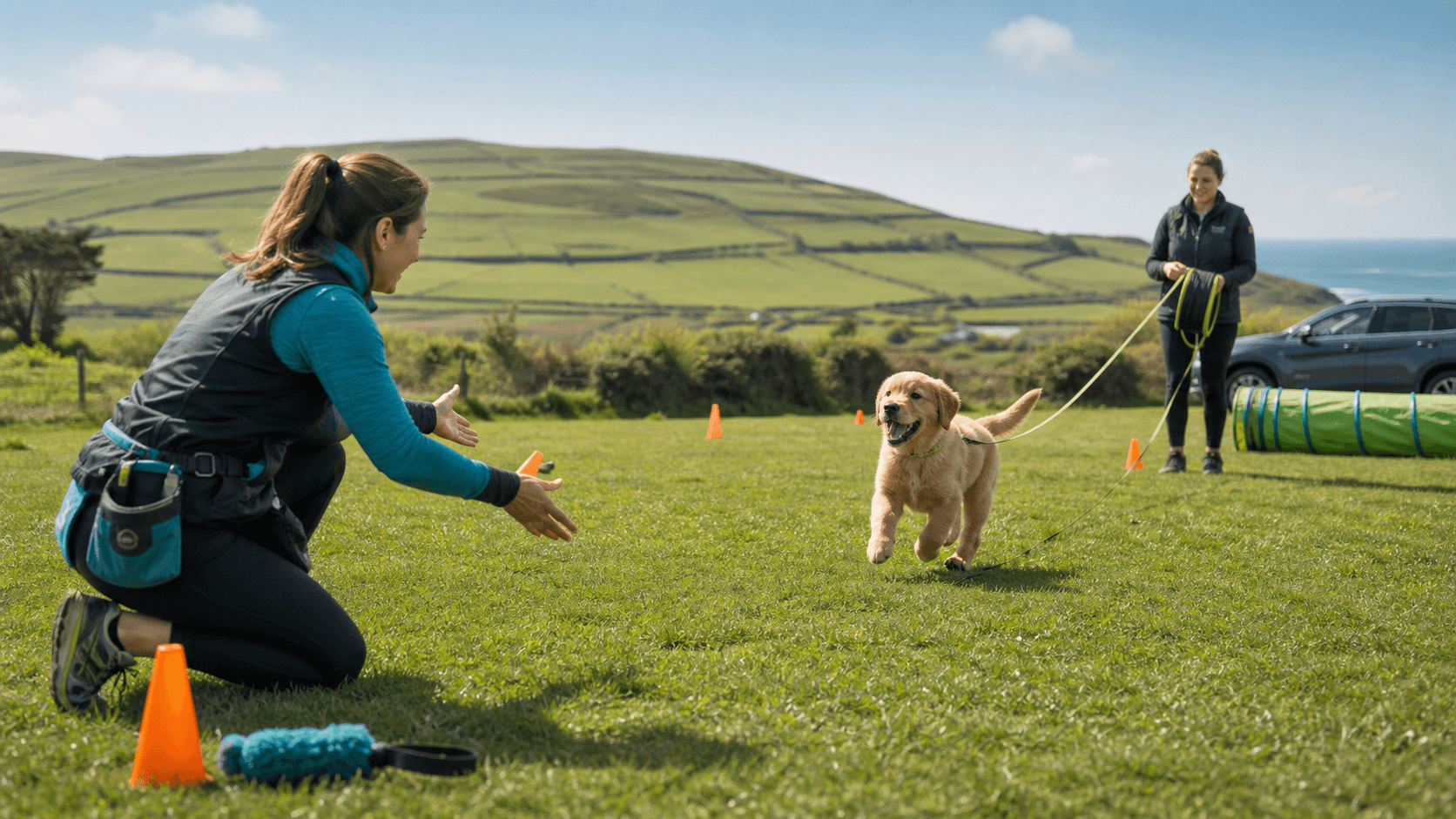
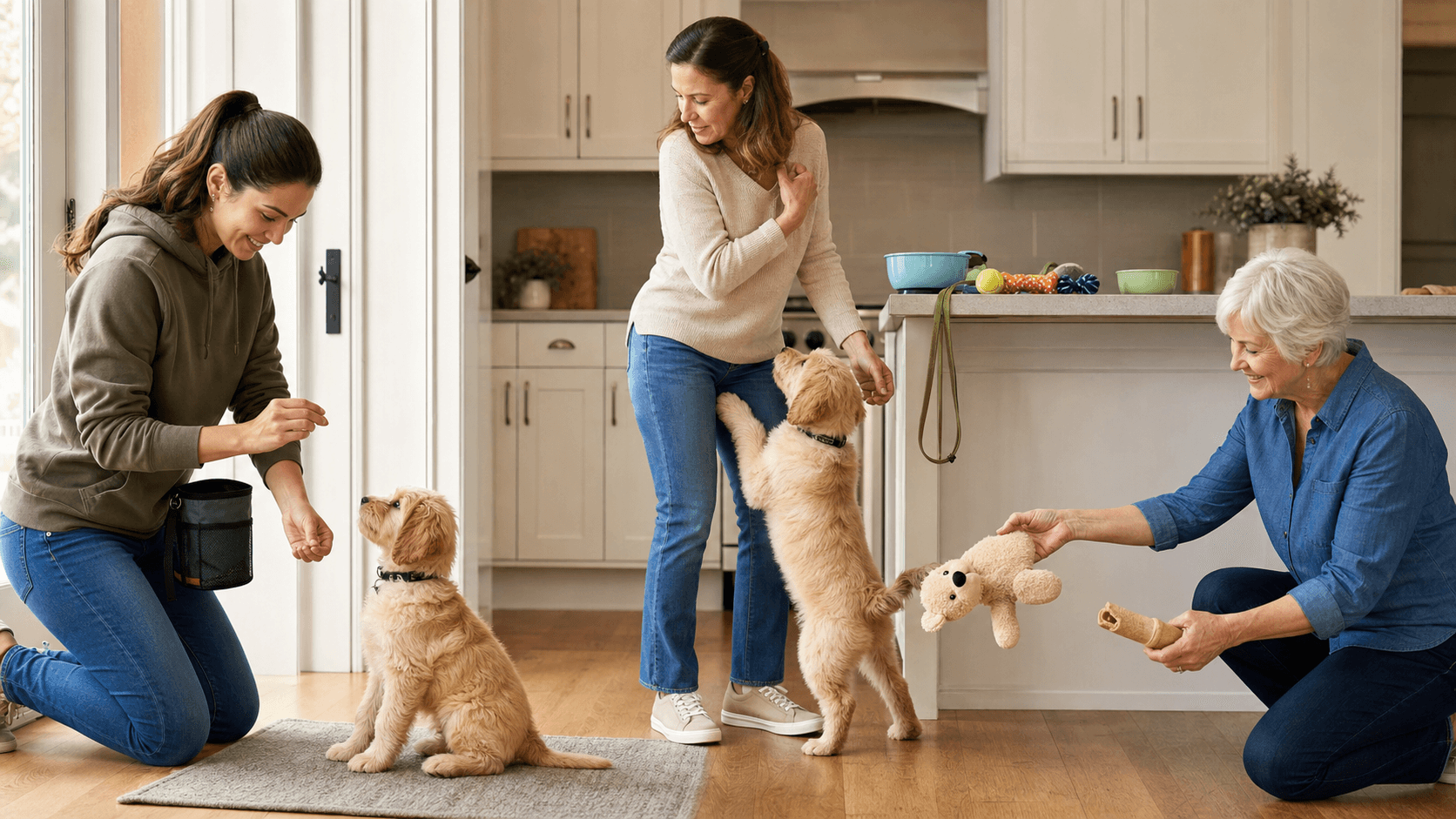
You can turn this into a family game indoors, calling the puppy back and forth between people. In springtime, the garden or a safe enclosed area works well too, especially when there are birds, gentle breezes, and new smells, but not too many distractions.
Real-life manners can slot into things you already do:
- Ask for a sit before doors open
- Ask for a sit while you place the food bowl on the floor
- Reward four paws on the ground when greeting people, instead of jumping
What can we ignore? Normal sniffing outdoors, a short pause before coming when called, or a slightly crooked sit. Focus on rewarding effort and good choices rather than chasing every tiny error.
By the end of day 6, we hope to see your puppy coming happily when called in the house and garden most of the time, and starting to sit before everyday rewards like food or going outside.
Day 7: Reviewing Progress and Adjusting the Plan
Day 7 is about looking at the whole week and noticing what has changed. Sit down for a few minutes and think about which cues your puppy responds to quickly, which ones are nearly there, and which still feel a bit unclear.
A very simple scorecard helps:
- Name response: rarely / sometimes / usually
- Sit in a quiet room: rarely / sometimes / usually
- Loose lead indoors: rarely / sometimes / usually
- Recall in the garden: rarely / sometimes / usually
- Settle on mat: rarely / sometimes / usually
Look for patterns rather than perfection. Are sessions better after a nap? Are mornings calmer than evenings? Do very short sessions work best?
Then pick your next week’s priorities. You might want to:
- Build longer settles on the mat
- Improve recall around other dogs or people
- Start loose lead walking in quiet outdoor areas
Puppy obedience training is a long-term process, not a one-week fix. This first week is mostly about building trust, clear communication, and confidence. When we keep sessions short, kind, and consistent, we give our puppies a steady base for everything they will learn later.
If you would like step-by-step support over the next few weeks, plus ongoing training ideas, you can join our online puppy club, where we build on this 7-day plan with simple weekly goals and guided training sessions.
Help Your Puppy Grow Into A Calm, Confident Companion
If you are ready to guide your young dog towards better behaviour, our tailored puppy obedience training programmes at Paws Academy Dog Training are designed to support both you and your puppy every step of the way. We focus on practical skills you can use in everyday life, building good habits from the start. If you would like to talk through your puppy’s needs or arrange your first session, contact us and we will be happy to help.
Frequently Asked Questions
- How long should at home puppy obedience training sessions be each day?
- Keep sessions short, about 2 to 5 minutes each, repeated a few times across the day. This helps your puppy stay focused and prevents both of you from getting overwhelmed.
- What should I teach first in the first two days of puppy training?
- Start with name recognition, sit, and toilet trips only. Focusing on a few basics makes progress easier to see and builds calm habits fast.
- How do I teach my puppy to respond to their name?
- Say your puppy’s name once, then mark the moment they look at you with a cheerful word like “Yes!” and give a treat near your legs. Rewarding close to you encourages them to turn toward you and move in.
- What is loose lead training, and how is it different from going for a walk?
- Loose lead training is teaching your puppy to stay near your side without pulling, often indoors at first. A walk is about covering distance and exploring, while loose lead practice is short, focused, and stops when pulling happens.
- What puppy behaviors should I ignore during short training sessions?
- Ignore normal puppy clumsiness, brief whining when a session ends, mild lead mouthing, and small wriggles during handling if your puppy settles quickly. Step in only if your puppy seems scared, overly frustrated, or unable to calm down.