Turn Missed Recalls Into Reliable Responses
Recall is the safety line of puppy obedience training. When your puppy comes when called, you can relax on the beach in Mayo, in a field in Westport, or on a forest path, knowing you can bring them back to you quickly and calmly. When they bolt across the spring grass and act like they have never heard the word “come” in their life, it feels pretty awful.
This “recall amnesia” is very common, especially around 4 to 8 months of age. At this stage, confidence grows, ears seem to shrink, and the world suddenly feels far more exciting than we are. That does not mean your puppy is stubborn or trying to annoy you. It usually means the training is not keeping up with their new level of freedom and curiosity.
In this clinic-style guide, we will look at the four main recall blockers: distance, fear or uncertainty, competing rewards, and the handler’s tone. Then we will walk through ten quick fixes you can use right away, plus a simple two-week rebuild plan that fits nicely with lighter spring evenings and outdoor walks.
Why Puppies “Forget” Come Outdoors
Indoors, recall often looks great. You call from the sofa, your puppy trots in from the kitchen, tail wagging, and all seems well. Step outside into the garden, a beach in Ballycroy, or a busy park, and suddenly your puppy is deaf.
Distance is a big part of this. Puppies that respond nicely from a few steps away often struggle when:
- You call from 10 or 20 metres
- There are new smells and sounds between you
- They are off lead and feel very free
As they move into adolescence, many puppies discover that the world is full of interesting things. Their brain starts saying, “That bird is more fun than you right now.” This is not them being “bad”. It is a sign that recall needs more careful practice in real-life places, not just in the living room.
Fear and uncertainty can also block recall. In the Irish countryside, there are lots of new things: tractors, sheep, waves, children, other dogs. If your puppy is unsure or a bit worried, running straight towards you might also mean running closer to the thing they find odd. So instead of coming, they might:
- Freeze and stare
- Sniff the ground to calm themselves
- Dart off at an angle to create space
Competing rewards are another big factor. Chasing birds, racing into the water, greeting another dog, and following a strong scent on the wind can all feel more rewarding than a dry biscuit and a flat “good dog”. Your puppy simply picks what feels best in that moment.
Handler Tone, Body Language, and Reward Mistakes
How we call our dogs matters a lot. A sharp or frustrated tone can make a puppy hesitate, especially if recall often leads to being told off, losing freedom, or going straight on the lead. If we stand tall, lean forward, and call in a tense voice, we might look a bit scary or at least not very fun to run towards.
Try swapping that for:
- A light, sing-song tone
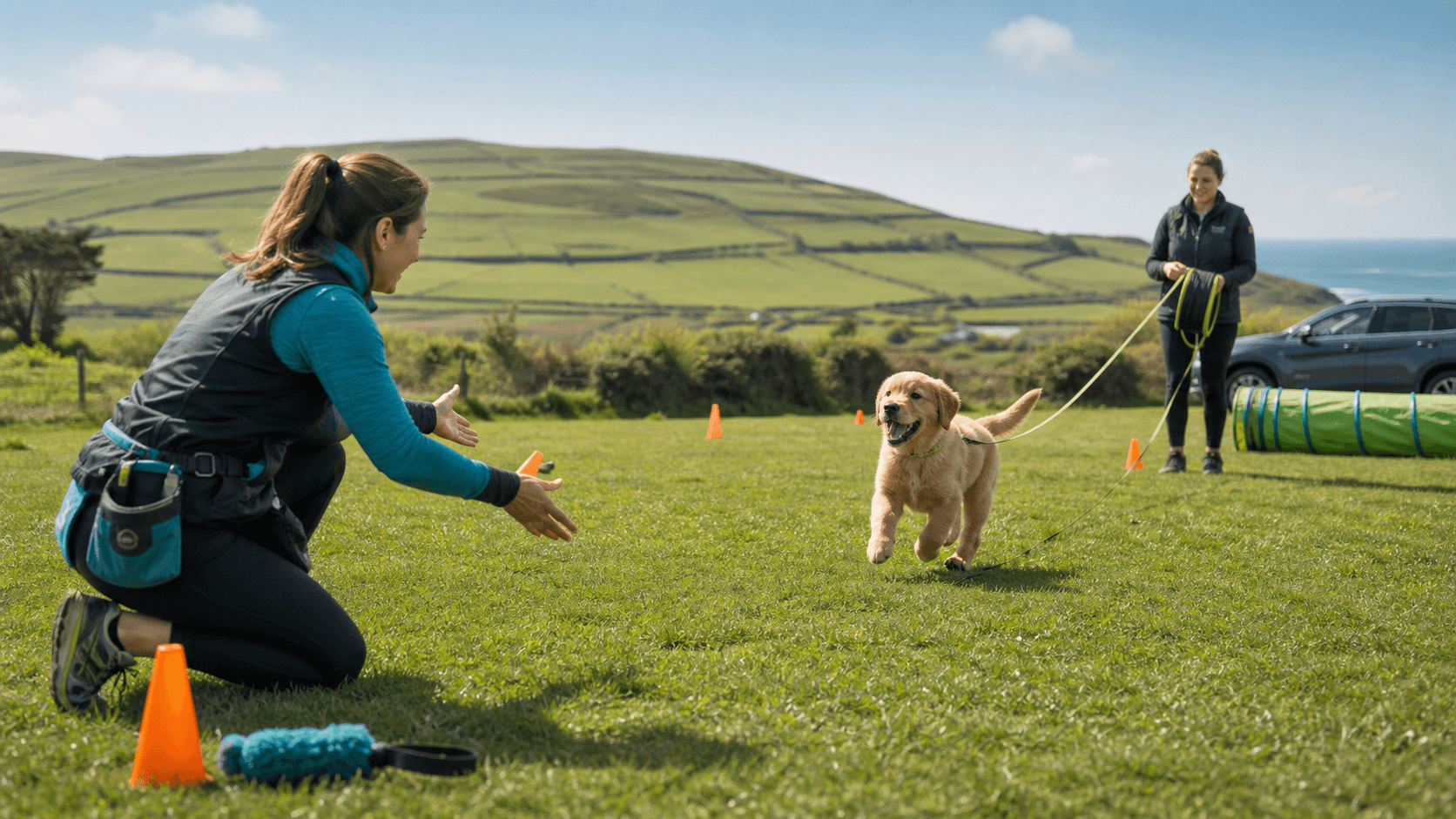
- Crouching down or turning sideways
- Moving backwards as you call
These small changes can make you look more inviting, almost like a moving target in a friendly game.
Many of us also make habits that quietly weaken recall over time. Common ones are:
- Calling only when fun is over, like bath time, car time, or crate time
- Repeating the cue again and again until the puppy tunes it out
- Chasing the puppy when they do not come, which turns it into a chase game
Reward quality matters too. If the same tiny dry treats appear every time, and sometimes recall is rewarded and sometimes it is not, your puppy learns that “come” is not a big deal. Strong recall, and good puppy obedience training in general, needs:
- High-value rewards, especially outdoors
- Fast delivery, right when they arrive
- Consistent payment at the start, to build a solid habit
Ten Quick Fixes to Boost Recall This Week
Let us tune things up with some simple changes you can start today.
Connection and cue clarity:
- Name game at home
Say your puppy’s name once, and when they look at you, pop a treat or start a short play. Do 5 to 10 quick rounds in different rooms. This sharpens that “ears flick on” response.
- One clear recall cue
Pick one word, like “Here!” or “Come!”, and protect it. Do not shout it again and again. Call once, then help them succeed by moving, clapping, or using a toy.
Make coming in more rewarding:
- Reward on arrival, then release
When your puppy races in, pay them well, then say a release word like “Go sniff!” and let them go back to what they were doing. This teaches that “come” does not always end the fun.
- Upgrade rewards outdoors
Use extra tasty food, like small bits of roast chicken or cheese, or a favourite tug toy in the garden and park. Outdoors needs outdoor-level rewards.
- Party-level praise
Give 3 to 5 seconds of happy, warm praise when they arrive. If they enjoy touch, add a little chest rub or a brief game. Make it feel like they won a prize.
Manage the environment and your responses:
- Stop calling when they will not come
If you know they are locked onto something, do not keep calling. Calmly walk over, collect them on the long-line if you have one, and reset closer. This avoids teaching that ignoring you works.
- Use long-lines on walks
A long-line clipped to a harness gives freedom but stops full-speed sprints out of reach. They still explore, but you keep a safety handle on their choices.
- Practise “chase me” games
Clap, say your cue, then run away a few steps so your puppy chases you. When they catch up, reward well. This builds a habit of running towards you at speed.
- Recall from easy distractions first
Start with mild smells or a person standing quietly at a distance. Only move up to calling away from dogs, waves, or wildlife once your puppy is winning the easy levels.
- Daily 3-minute recall drills
Short and frequent beats long and rare. Do a few mini sessions at home, in the garden, and at the park edge. Keep each one fun and high success.
Two-Week Recall Rebuild Plan for Spring Walks
Week 1 is all about a foundation reset at home and in the garden. Keep things simple and easy so your puppy can win again and again.
- Practise short recalls indoors, then on a long-line in the garden
- Only call when your puppy is likely to succeed
- Use top rewards every single time, no half-hearted treats
Change your body position often. Sometimes stand still, sometimes crouch, sometimes jog backwards as you call. Mix food, toys, and chase games so recall always feels interesting but very predictable: hear cue, sprint in, get paid.
Week 2, we start staging real-world distractions. Choose quiet outdoor spots, like an empty bit of beach early in the morning, a calm field, or a quiet corner of a park. Keep the long-line on for safety.
- Begin with mild distractions like distant dogs or soft traffic noise
- Call once, reward heavily for fast responses
- Gradually work closer to more exciting areas, like busier paths or shoreline
You can also add “surprise recalls” on normal walks. Call once, reward well when your puppy comes in, then send them back to explore. Over time, coming to you becomes a simple habit instead of a big decision.
Build Lifelong Recall with Support and Structure
Recall is not a trick you teach once and then tick off. It grows and changes as your puppy moves through each life stage, especially those teenage months when independence surges. The more you practice smart recall now, the easier everything else in puppy obedience training becomes, from loose lead walking to staying calm around livestock and people.
At Paws Academy Dog Training, we work with reward-based methods and clear, kind structure, both in person in Mayo and through our online courses. Our online puppy club is designed to give you step-by-step recall games, live support from a qualified dog behaviourist, and fresh training ideas as your puppy matures, so you are never working on this important skill alone.
Help Your Puppy Grow Into A Calm, Confident Companion
At Paws Academy Dog Training, we tailor our puppy obedience training to suit your puppy’s personality, pace and your daily routine. We focus on building good habits now so you can avoid stress and confusion later. If you are ready to get started or have questions about what is best for your dog, contact us and we will talk you through your options.
Frequently Asked Questions
- Why does my puppy ignore the come command outside but listen indoors?
- Outside adds distance, exciting smells and sounds, and a stronger sense of freedom, so the cue is harder to follow than it is at home. Many puppies also hit a common “recall amnesia” phase around 4 to 8 months as confidence and curiosity grow.
- At what age do puppies start “forgetting” recall and why?
- Many puppies struggle with recall between 4 and 8 months of age as they move into adolescence. They are not being stubborn, the environment simply becomes more rewarding and distracting than the handler.
- How do I get a more reliable recall when my puppy is distracted by dogs, birds, or smells?
- Use higher value rewards outdoors and deliver them immediately when your puppy reaches you, so coming back competes with the distraction. Practice in stages, starting with easy setups and gradually adding distance and distractions, and avoid repeating the cue over and over.
- Can fear or uncertainty stop a puppy from coming when called?
- Yes, if your puppy feels unsure about something like a tractor, waves, sheep, or unfamiliar people, they may hesitate or move away instead of running toward you. They might freeze, sniff to self-soothe, or dart off at an angle to create space.
- What is the difference between a recall problem caused by distance and one caused by handler tone?
- Distance problems show up when your puppy cannot respond from 10 to 20 metres or when there are lots of sights and smells between you. Handler tone problems happen when your voice and body language feel sharp or tense, making you less inviting, especially if “come” often leads to the lead going on or fun ending.