Make Everyday Life Your Puppy Manners Classroom
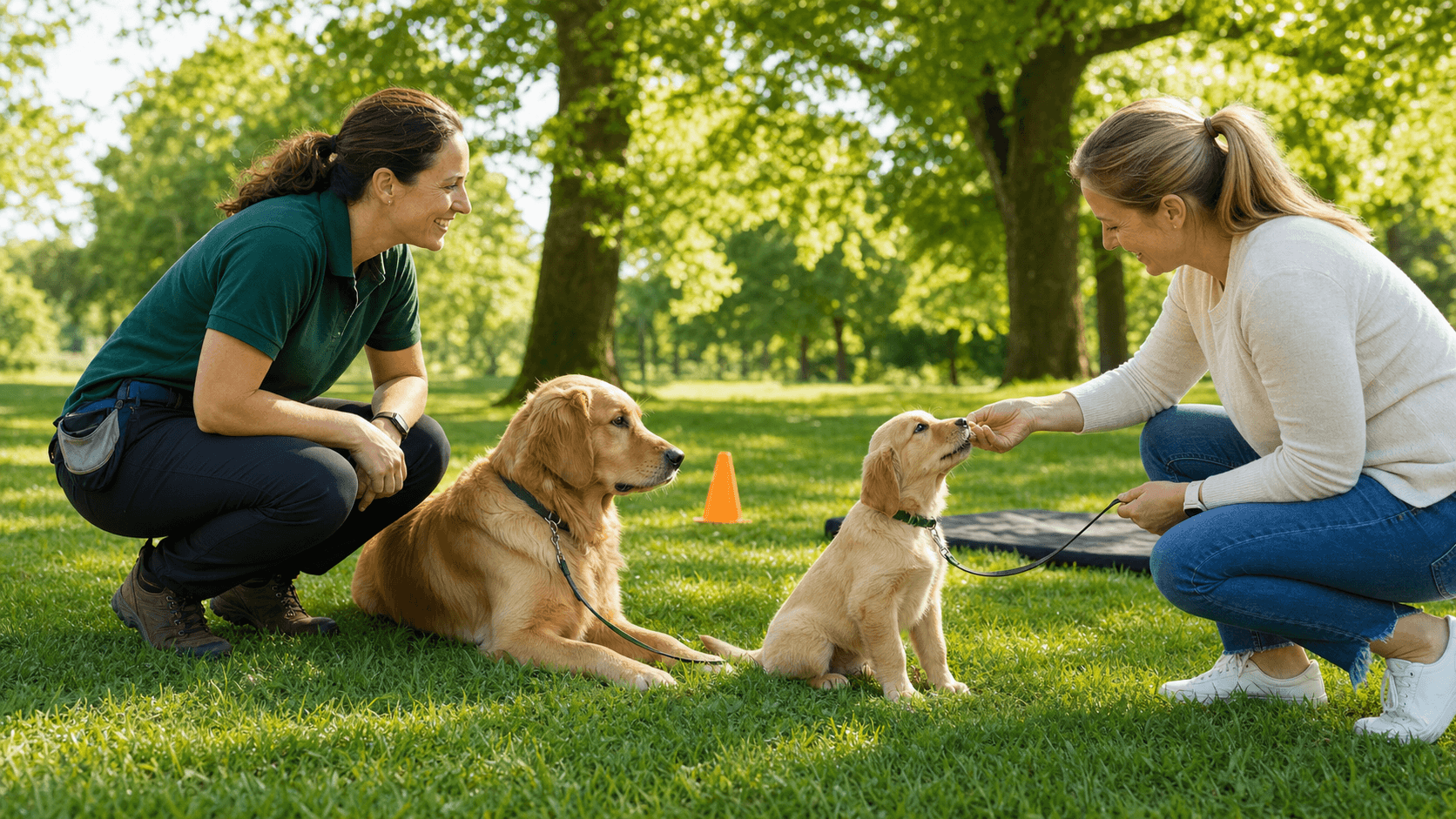
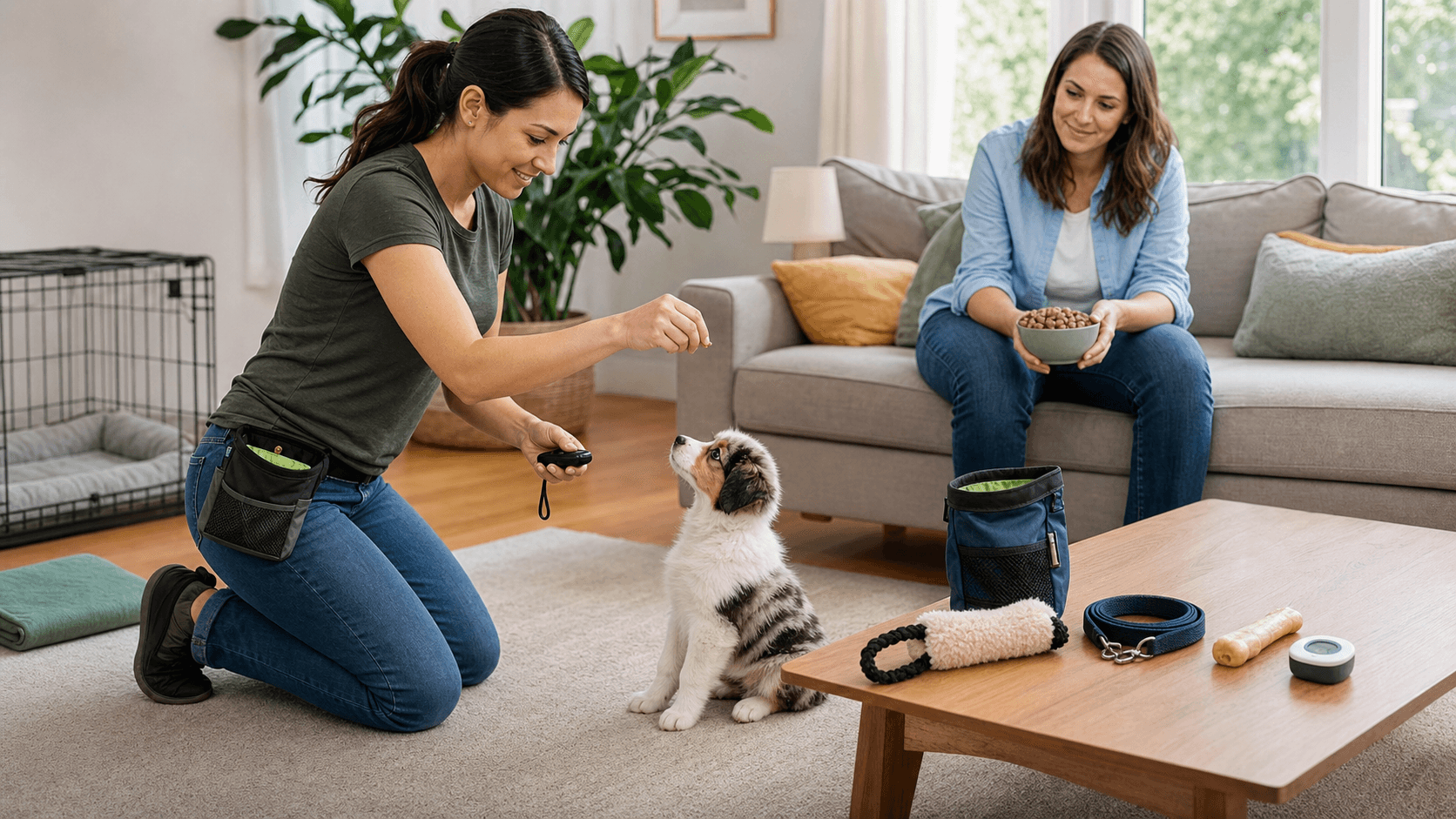
Puppy dog training works best when it fits into normal family life. When we use our daily routines as little training sessions, manners grow quietly in the background. No big drama, no long, stressful lessons, just lots of tiny, repeatable moments.
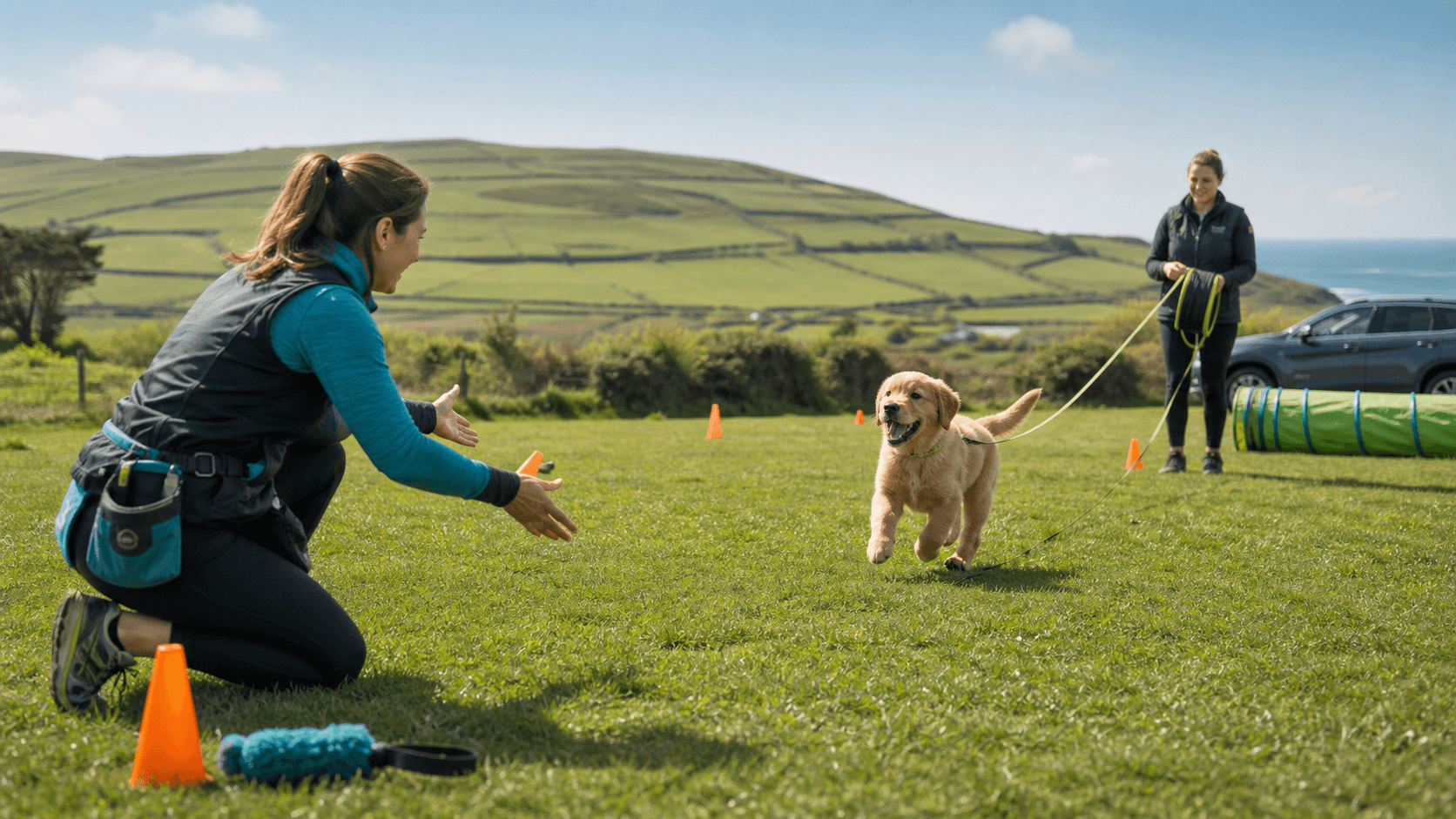
Spring and early summer are perfect times to reset how things run at home. School holidays, lighter evenings and more time outdoors in the Irish weather give us extra chances to practise good habits. When everyone in the family knows their role, the puppy hears the same message all day, which makes learning calm and clear.
We like to think of this as a role-based plan. Kids, teens and adults all get age-appropriate jobs that match what they can safely and happily do. In this guide we will focus on three common trouble spots, jumping at children, stealing toys and begging at mealtimes, and show how different family members can help.
At Paws Academy Dog Training, we build positive, reward-based puppy dog training into real life. Our online programmes and puppy club give families simple steps to follow each week, wherever you live, as well as in-person help around Westport and Ballycroy.
Set up Simple Household Rules Everyone Can Follow
Before we ask a puppy to follow rules, we need people rules. A short family meeting is a great place to start. Keep it light and short, no long lectures, and agree on just three or four clear house rules.
For example:
- Four paws on the floor for greetings
- No feeding from the table, ever
- Children’s toys live in their own boxes or shelves
- Puppy has a bed or crate where they rest, not the kitchen floor at mealtimes
Write your rules down in simple, positive words, and put them somewhere obvious like the fridge. Positive wording helps children remember. For instance, instead of “no jumping”, use “we say hello with four paws on the floor”.
Each rule needs a “what we do instead” plan. That might look like:
- If the puppy wants attention, they sit, then we greet or give a treat
- When the family eats, puppy goes to their settle spot with a safe chew
- If a toy is on the floor, it is a puppy toy, so kids put their special things away
Try to keep the same rules during term-time and holidays. Routines may change a little when school is out, but the puppy rules stay steady. This helps your puppy feel safe and makes training stick faster.
Have a small space in your weekly review to update rules as your puppy grows. As they get older and learn more skills, you can gently raise the bar without confusing them.
Age-Appropriate Roles for Kids, Teens and Adults
Now we match people to puppy jobs. The goal is not to give one person everything, but to spread training across the day and across the family.
Young children can help with:
- Tossing treats on the floor when an adult calls “come”
- Dropping a bit of food on the puppy’s bed for “go to bed”
- Helping measure out the puppy’s food with an adult’s help
Older children are ready for:
- Short cue practice like sit, down and wait at the door
- Helping shut baby gates and check that puppy zones are safe
- Setting up a small play area with puppy toys and chews
Teens can usually take on:
- Short, structured training games, such as “find it” or simple recall
- Easy walks in quiet areas, if the puppy is ready and an adult agrees
- Logging progress in a shared notebook or app, such as new cues learned or how long the puppy can settle
Adults keep the big picture steady. That means:
- Choosing training priorities for the week
- Setting up the home with baby gates, pens and safe zones
- Making final decisions on rules so messages are clear for everyone
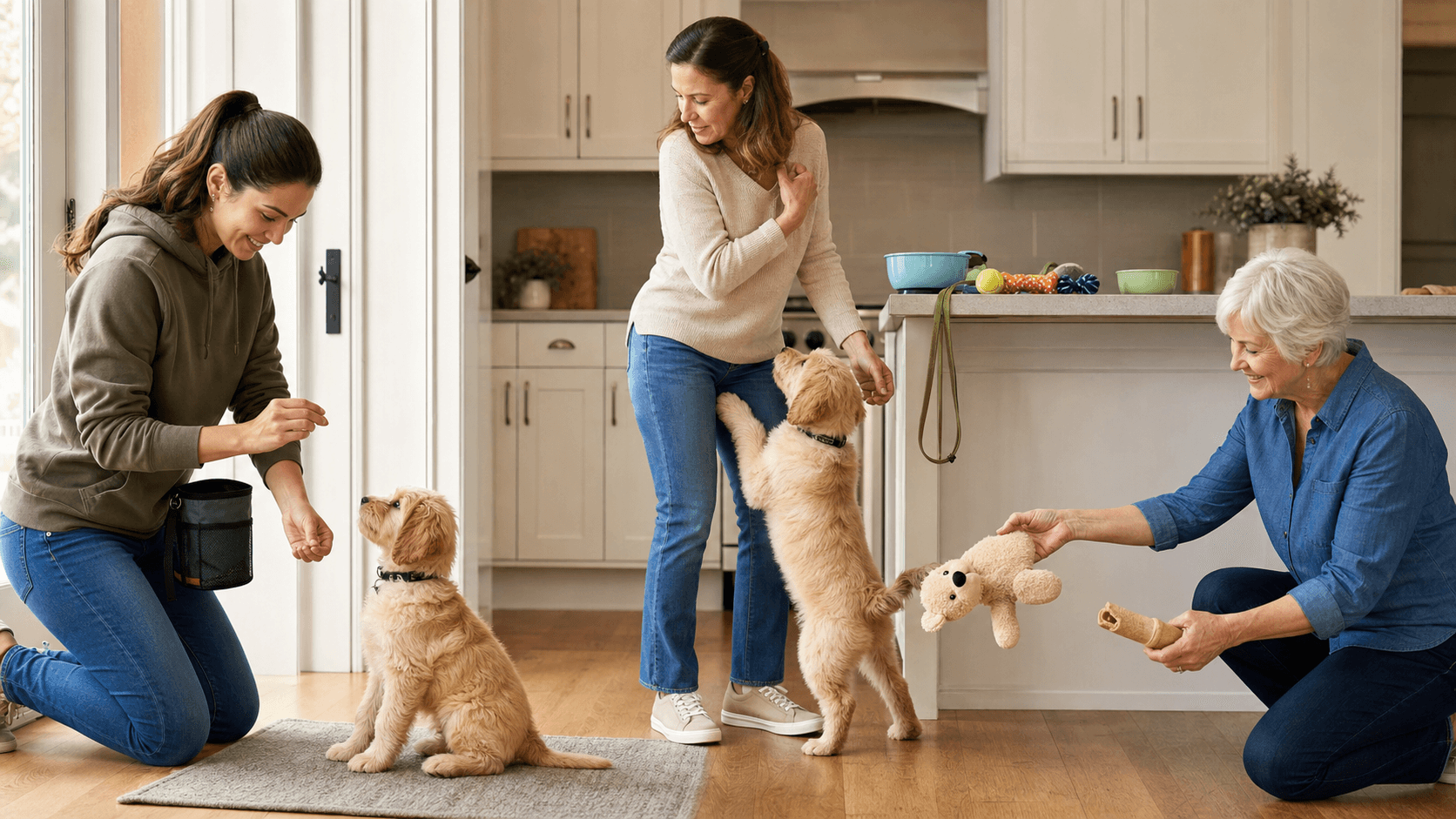
This shared plan supports kind, reward-based puppy dog training. Nobody has to run long, intense sessions. Instead, each family member does a small, realistic piece. You can even link jobs to daily markers, like school runs, after-school clubs or weekend outings, so the routine holds as seasons and schedules shift.
Calm Puppy, Calm Kids: Fix Jumping, Stealing and Begging
Let us tackle three of the biggest family flashpoints.
Jumping at kids
Puppies jump because it works; they reach faces and get attention. We want a “four paws on the floor” habit instead.
- Adults and teens reward calm greetings with treats or gentle attention when all paws stay down
- If the puppy jumps, children practise a simple move, stand still like a tree, turn their body slightly away and say nothing
- Children call an adult if the puppy keeps jumping, so the adult can guide the puppy away and try again later
- Teens or adults lead greeting practice at the front door, acting out what will happen when friends and visitors arrive during holidays
Stealing toys
From a puppy’s view, a soft toy on the floor looks like fair game.
- Adults and teens play a “swap game”, trading the stolen item for a tasty treat or fun puppy toy
- Once the puppy lets go, the human calmly puts the child’s toy in a set storage spot
- Kids help by doing a quick “toy check” before playtime, putting special things in boxes or on higher shelves
Mealtime begging
Begging at the table is very common and very fixable with a clear routine.
- Adults choose a settle spot, such as a bed or crate away from the table
- Start with short practices, part of the puppy’s meal scattered on the bed while someone sits at the table for a minute or two
- Slowly build up the time, so the puppy learns that family mealtime means chill time
- Teens can track how long the puppy can stay settled, turning it into a quiet family challenge
- Adults protect the “no food from the table” rule for everyone, including visitors, so the puppy is not rewarded for begging
Your Weekly Family Training Review Checklist
A short weekly review keeps everyone on the same page. Ten to fifteen minutes is plenty, maybe on Sunday evening or before the school week starts.
Use a simple checklist like:
- Did we all stick to the same house rules?
- Has jumping, toy stealing or begging improved, stayed the same or slipped?
- Does anyone need an easier role, or is someone ready for a new, slightly harder job?
- Are there any changes coming, like trips, exams or visitors, that we should plan for with the puppy?
You can add small rewards for the humans too. Maybe a family movie night, a beach walk or a picnic in a dog-friendly area when everyone follows through on their roles. A tiny bit of record-keeping helps, even just a few notes in a notebook that you can bring to an online puppy club session if you want fresh ideas.
Turn Today’s Routines Into Lifelong Puppy Manners
Good puppy dog training does not need to be grand or fancy. When we weave simple, reward-based habits into daily life, manners grow bit by bit. The puppy learns what works, the family feels more relaxed and everyone understands the plan.
To sum up, choose a few clear house rules, give kids, teens and adults age-appropriate roles, and focus on calm fixes for jumping, stealing and begging. Then top it off with a short weekly review to keep things on track as your puppy grows.
Start small this week. You might pick just one routine, like calm greetings at the door or settling at mealtimes. Once that feels smooth, add the next. Over time, these tiny choices become the base of a well-mannered adult dog that fits happily into family life.
Give Your Puppy The Head Start They Deserve
If you are ready to build good habits from day one, our tailored puppy dog training programmes will guide you step by step. At Paws Academy Dog Training we focus on calm, consistent methods that help your puppy grow into a confident, well mannered companion. We are happy to answer questions and recommend the right next step for you both, so feel free to contact us to get started.
Frequently Asked Questions
- What is a role-based puppy training plan for a family?
- A role-based puppy training plan assigns simple, age-appropriate training jobs to kids, teens, and adults so the puppy hears the same rules all day. It turns normal routines like greetings, meals, and play into short, repeatable practice moments.
- How do I stop my puppy jumping up at kids during greetings?
- Use a clear rule like, we say hello with four paws on the floor, and only give attention when the puppy is on the ground or sitting. Kids can help by standing still and tossing a treat to the floor when the puppy stays down, while an adult manages the space and timing.
- How can we stop a puppy stealing children’s toys around the house?
- Make a household rule that children’s toys are put into boxes or on shelves, and anything left on the floor becomes fair game for the puppy. Set up a puppy play area with approved toys and chews, and use baby gates or zones so the puppy cannot practice grabbing kid items.
- How do I stop my puppy begging at the table during family meals?
- Pick a consistent rule like no feeding from the table, ever, and send the puppy to a bed or crate with a safe chew before the meal starts. Keep the puppy off the kitchen floor at mealtimes so begging is not rewarded by attention or dropped food.
- What is the difference between house rules and puppy cues like sit and down?
- House rules are family-wide expectations such as where the puppy rests during meals or how greetings happen, and everyone follows them the same way. Cues like sit, down, and wait are specific behaviors that different people can practice in short sessions to support those rules.