Summer Confidence for Your Puppy Without Busy Classes
Good social skills turn summer with a puppy into something calm and fun, not stressful. We want relaxed walks, easy café stops, and simple garden get-togethers where our puppy can settle, listen and feel safe, even when new people or dogs appear. That does not have to come from noisy group classes. It can be built with short, gentle training woven into daily life.
Many owners tell us they like the idea of social skills, but not big indoor halls, crowded fields or trying to talk over barking. Summer is already full of trips, visitors and outdoor plans. The good news is that puppy training for social skills works best in small steps, in real places, using rewards and play. With thoughtful practice at home and on walks, and with guided help from an experienced behaviourist, everyday summer moments can become safe learning opportunities.
Rethinking Puppy Socialisation in Summer
Socialisation is not about letting your puppy greet every dog or person. True socialisation means giving your puppy lots of positive, gentle experiences with life in general. That includes:
- Different people and voices
- Other dogs seen at a distance and up close
- Everyday sounds like traffic, lawn mowers and children playing
- New places such as car parks, paths, beaches or quiet pubs
Summer is a great season for this. There is more light in the evenings, more time outside, and more natural chances for your puppy to see the world. Garden barbecues, trips to the seafront, sitting on a bench in town, visiting family, all of these can help, as long as we keep them calm and short.
Busy group classes do not suit every puppy or every person. Some pups are shy or easily worried. Others get so wound up that they cannot think. Some owners feel tense in groups or cannot match set times each week. That does not mean you are behind or doing things wrong. Short, planned sessions in quieter places often teach better manners and better coping skills than wild play in a hectic room.
When we slow things down, we give the puppy time to notice the world, stay under threshold and practise good habits, instead of just bouncing from one exciting thing to the next.
Calm Garden Sessions That Build Real Social Skills
Your garden, balcony or small yard can be a perfect starter training zone. It is familiar and safer than a busy park, but still has birds, neighbour sounds and passing cars to gently stretch your puppy’s focus.
You can set up simple summer routines like:
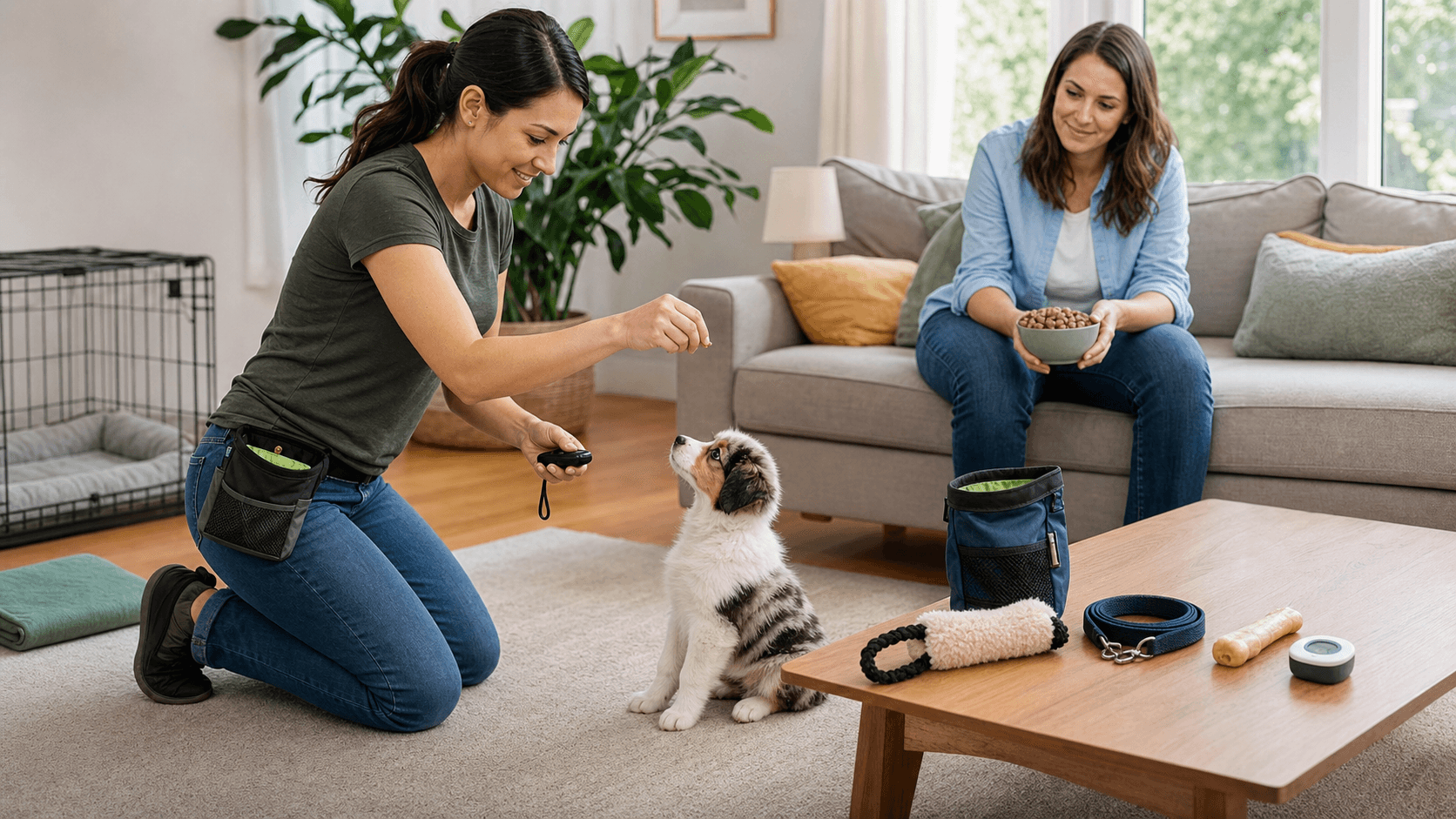
- Short “picnic training” on a blanket with a toy and treats
- Practising sit, down and wait for a few seconds at a time
- Rewarding your puppy for choosing to look back at you after a sound
- A few seconds of handling, such as lifting ears or gently touching paws
Spread these out across the day so they feel light and fun. Many owners like to have a mat or small blanket that means “time to settle”. Lay it down, reward your puppy for lying on it, then sit with a drink or a book while your puppy learns that relaxing near you is a good thing.
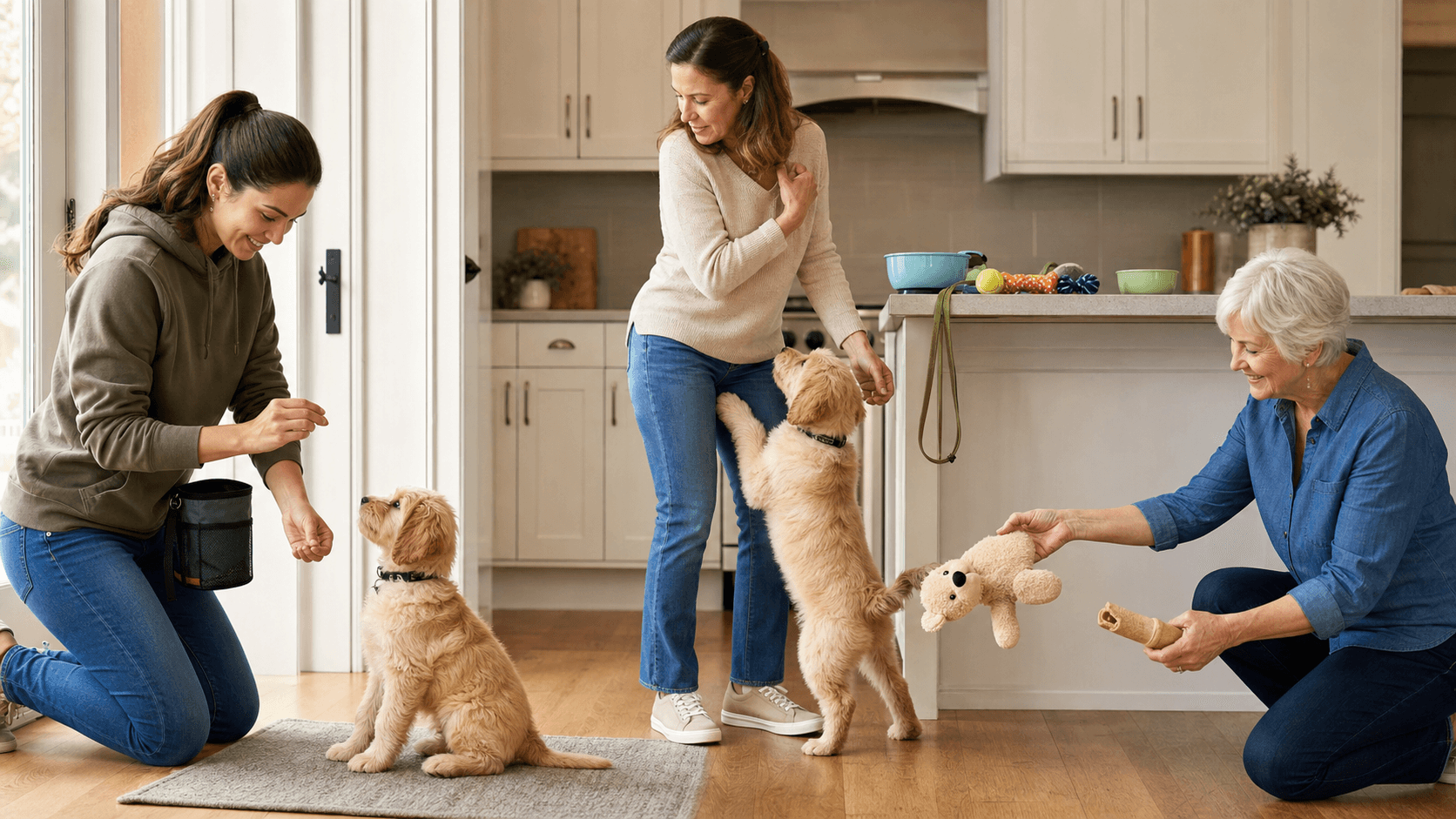
You can also invite trusted friends or family, one at a time. Keep visits simple:
- Ask your guest to ignore the puppy at first so the pup can sniff and choose to approach
- Give the guest a few treats to drop on the floor when the puppy is calm
- Set up a routine: visitor arrives, puppy goes on mat, gets treats, then has a short hello
This helps your puppy learn that visitors are predictable, not exciting surprises. These quiet garden sessions create the base for later trips to cafés, busier parks or village events, and they work very well alongside clear, step-by-step online puppy lessons.
Safe One to One Encounters with Dogs and People
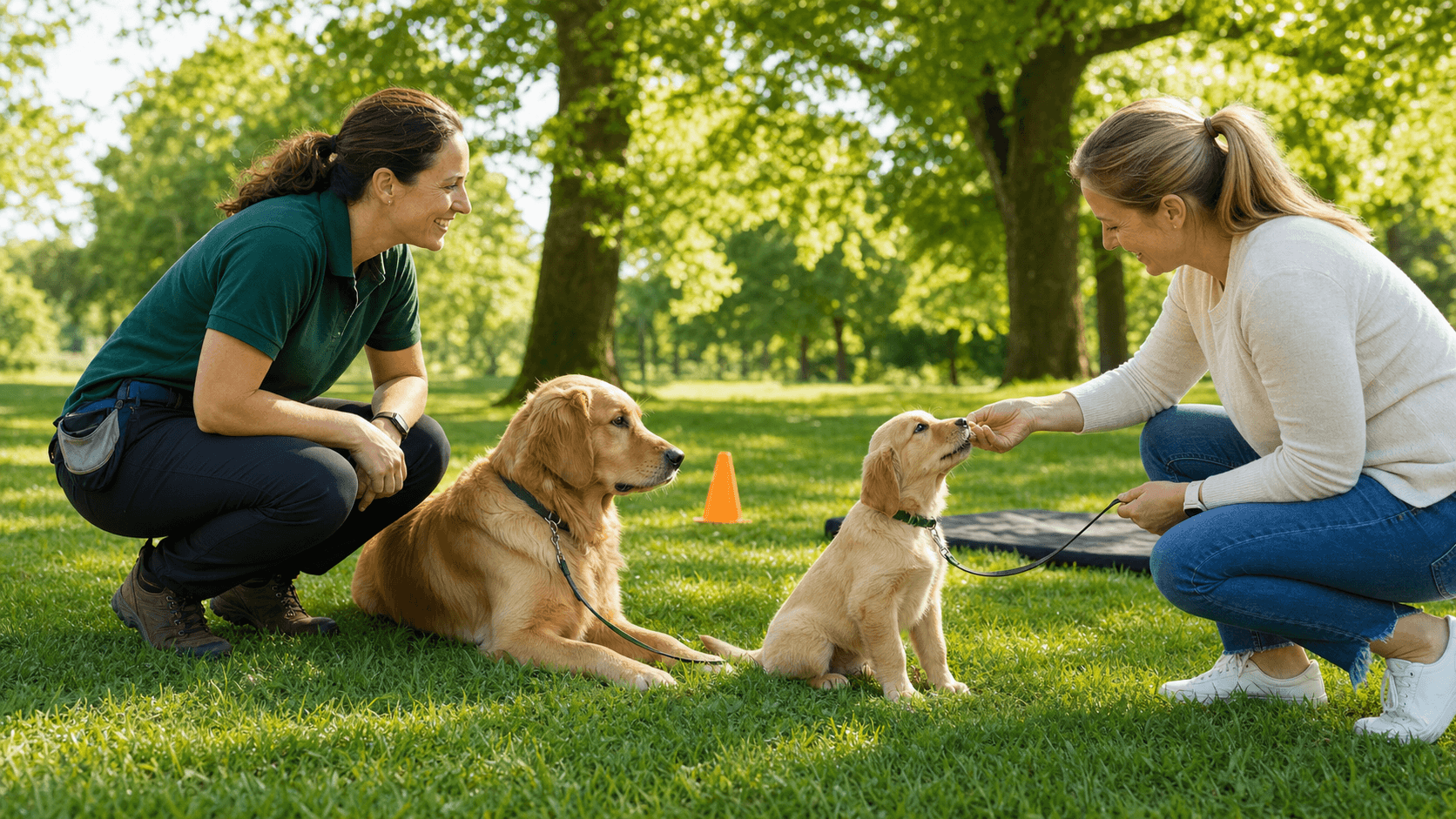
Large groups of puppies playing together can look cute, but they often move too fast for learning. One-to-one meet-ups are usually gentler. The puppy has more space to watch, sniff and think, without being crowded.
For dog meet-ups, try to:
- Choose friendly, steady adult dogs with good manners
- Meet on neutral ground, such as a quiet path or open green
- Keep leads loose so bodies are soft, not tight
- Allow a short sniff, then walk away together before anyone gets overexcited
Think of it as “polite small talk”, not a full-on party. If either dog is stiff, hiding behind legs, or bouncing at the end of the lead, take a bigger distance and walk side by side instead of nose to nose.
For people greetings on summer walks, a simple pattern helps. Before someone comes close, ask your puppy for a sit, reward eye contact, then give permission for a brief hello if both puppy and person are comfortable. After a second or two, call your pup back and reward again. The message is: stay calm, check in with us, then say hi.
Watch for red flags such as:
- Puppy hiding behind you and refusing treats
- Jumping, grabbing clothes or hands
- Persistent barking that does not ease with distance
If you see these, it is a sign to step back, not to push through. More space, shorter greetings and support from a behaviour professional or structured puppy club can keep things safe and kind.
Turning Summer Outings Into Training Gold
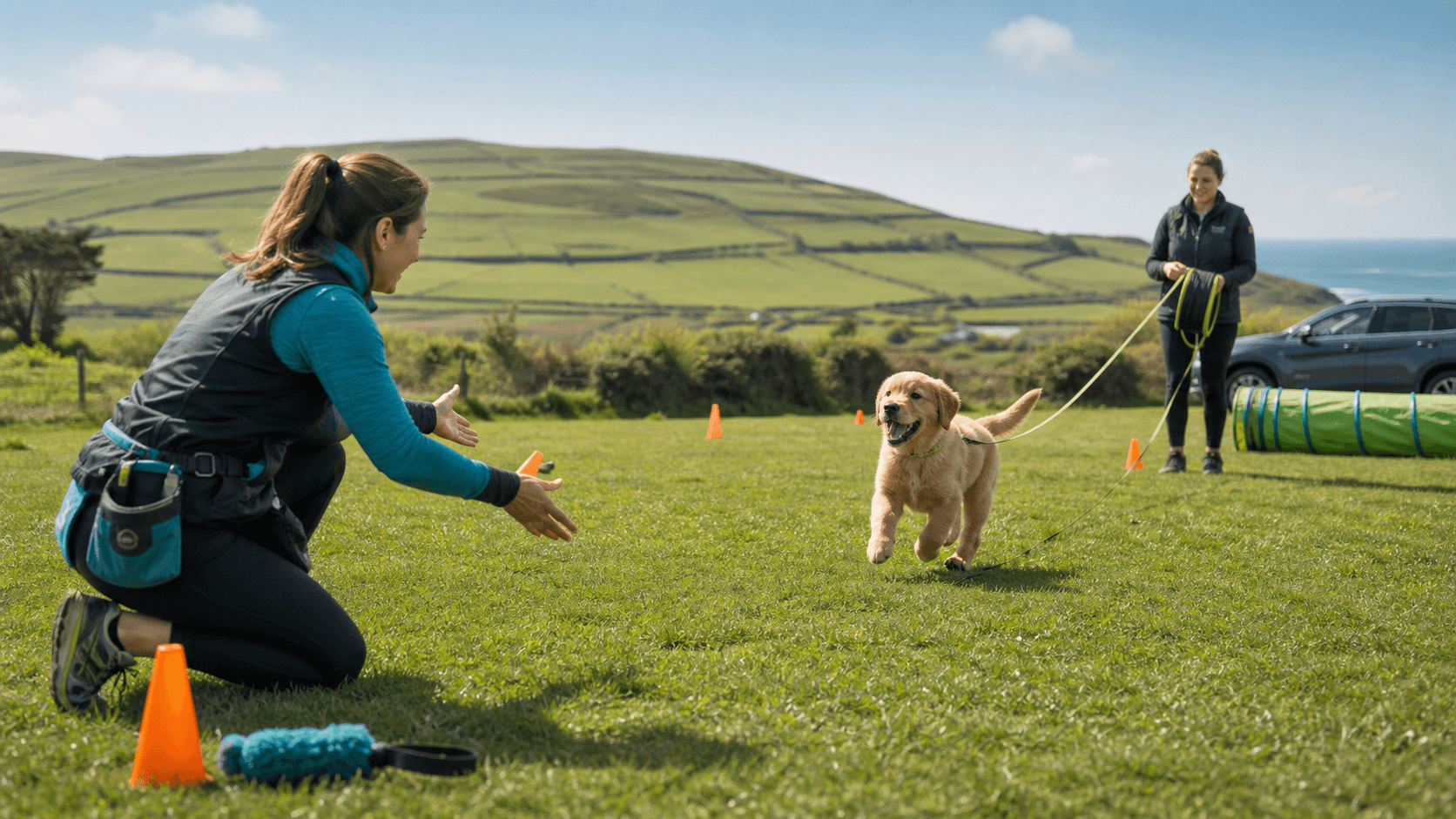
Normal summer activities are full of chances to practise social skills. A quiet café table outside, a walk along the seafront, a seat on a park bench, even a short car ride to a new path can all become mini training sessions.
One of our favourite tools is a “look and learn” session. Find a spot where your puppy can see life, but is not in the middle of it. When your pup notices a dog, child, bicycle or buggy, say “yes” and give a treat for simply watching calmly. Then move away while your puppy is still relaxed. You are teaching, “You can see that thing, and good stuff happens, and nothing bad follows.”
To give your outing some shape, you might follow a loose plan:
- 2 minutes of gentle loose lead walking
- 1 minute of sits, simple tricks or hand targets
- 2 to 3 minutes of relaxing on a mat or blanket while you sit
- A sniffing break to explore the grass or sand
Then you head home before your puppy gets tired. Several of these short, positive trips each week add up. They help your puppy learn that the outside world is safe and understandable, which makes holidays, visitors and days out smoother for the whole family.
Keep Progress Going with Gentle Guidance All Summer
The big message is simple: your puppy can grow great social skills without crowded group classes. Calm, reward-based training tucked into everyday summer life works very well. Garden sessions, quiet one-to-one meetings, short café stops and “look and learn” walks all build your puppy’s confidence step by step.
Choose one or two ideas that feel easy this week. Notice what your puppy enjoys and what still feels tricky. If you would like steady guidance, clear video lessons and professional feedback, our team at Paws Academy Dog Training, based in Westport and Ballycroy and working online, is here to help through our online puppy club. Small, kind actions now shape how your dog will feel about the world for years, and you do not have to figure it all out on your own.
Give Your Puppy The Best Start Today
At Paws Academy Dog Training, we focus on building your puppy’s confidence, manners and social skills from day one. If you are ready to guide your new companion with clear structure and kind, consistent methods, our puppy training is the ideal next step. We will help you turn everyday challenges into simple routines you and your puppy can enjoy. If you have any questions or would like to book, please contact us.
Frequently Asked Questions
- What does puppy socialisation really mean in summer?
- Puppy socialisation means giving your puppy many calm, positive experiences with people, places, sounds, and other dogs. It is not about greeting everyone, it is about learning to feel safe and relaxed around everyday life.
- Can my puppy learn social skills without busy group classes?
- Yes, many puppies learn better with short, gentle sessions in real places like your home, garden, and quiet walks. Small steps with rewards and play help your puppy stay calm enough to learn, instead of getting overwhelmed or overexcited.
- How can I build my puppy’s confidence in the garden before going to cafés or busier places?
- Use quick routines like settling on a mat or blanket, practising sit, down, and wait for a few seconds, and rewarding your puppy for checking in with you after a sound. Keep sessions short and spread them through the day so your puppy learns that relaxing near you is normal.
- How do I introduce my puppy to visitors without them getting too excited?
- Ask visitors to ignore your puppy at first so your puppy can sniff and choose to approach. Give the visitor treats to drop when your puppy is calm, and use a simple routine like going to a mat, earning treats, then having a brief hello.
- What is the difference between puppy group classes and one-to-one socialisation meet-ups?
- Group classes can be noisy and fast, which may overwhelm shy puppies or wind up excitable ones. One-to-one meet-ups usually move more slowly, give more space, and let your puppy practise calm behaviour with a steady dog or a single person.