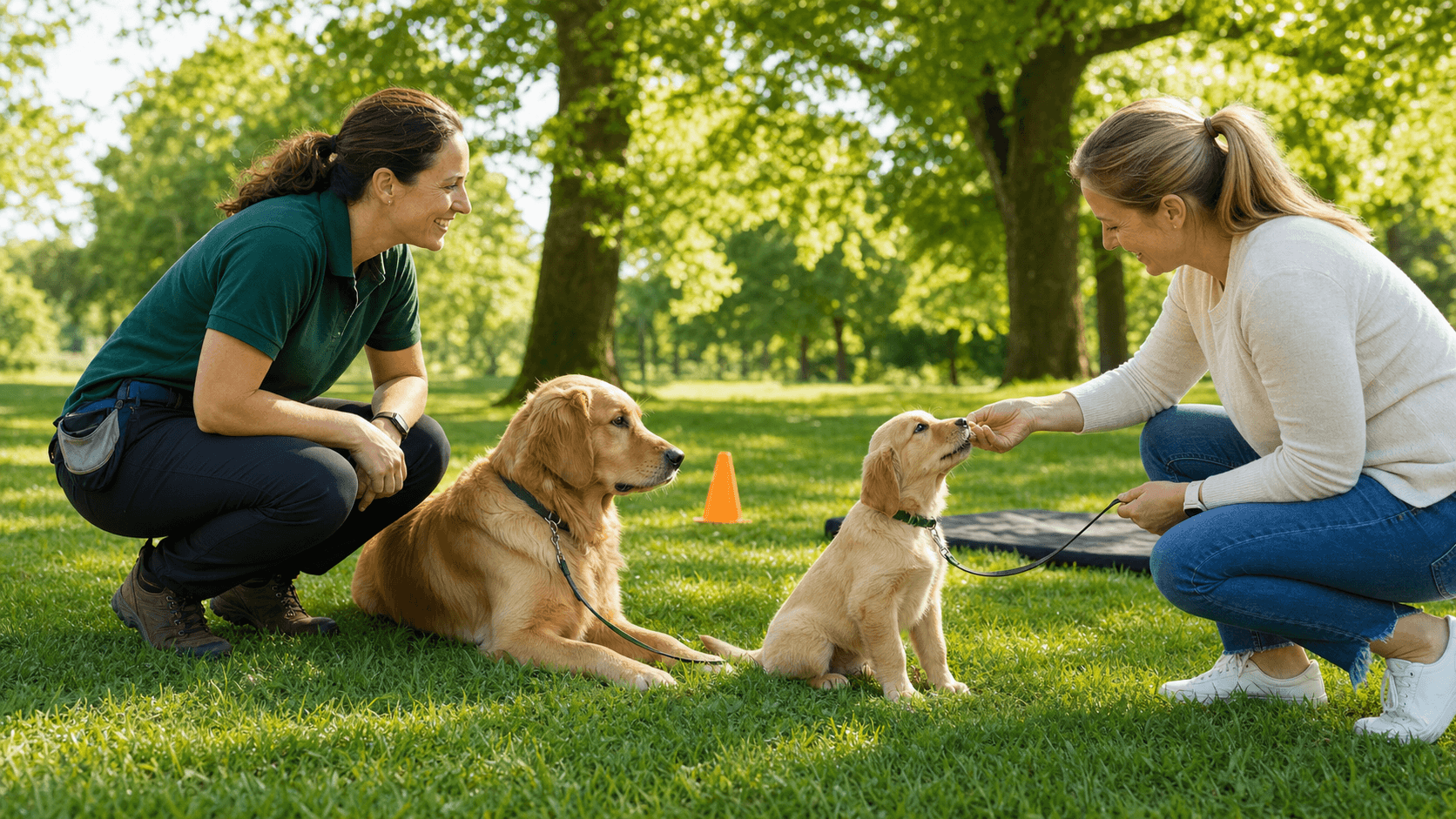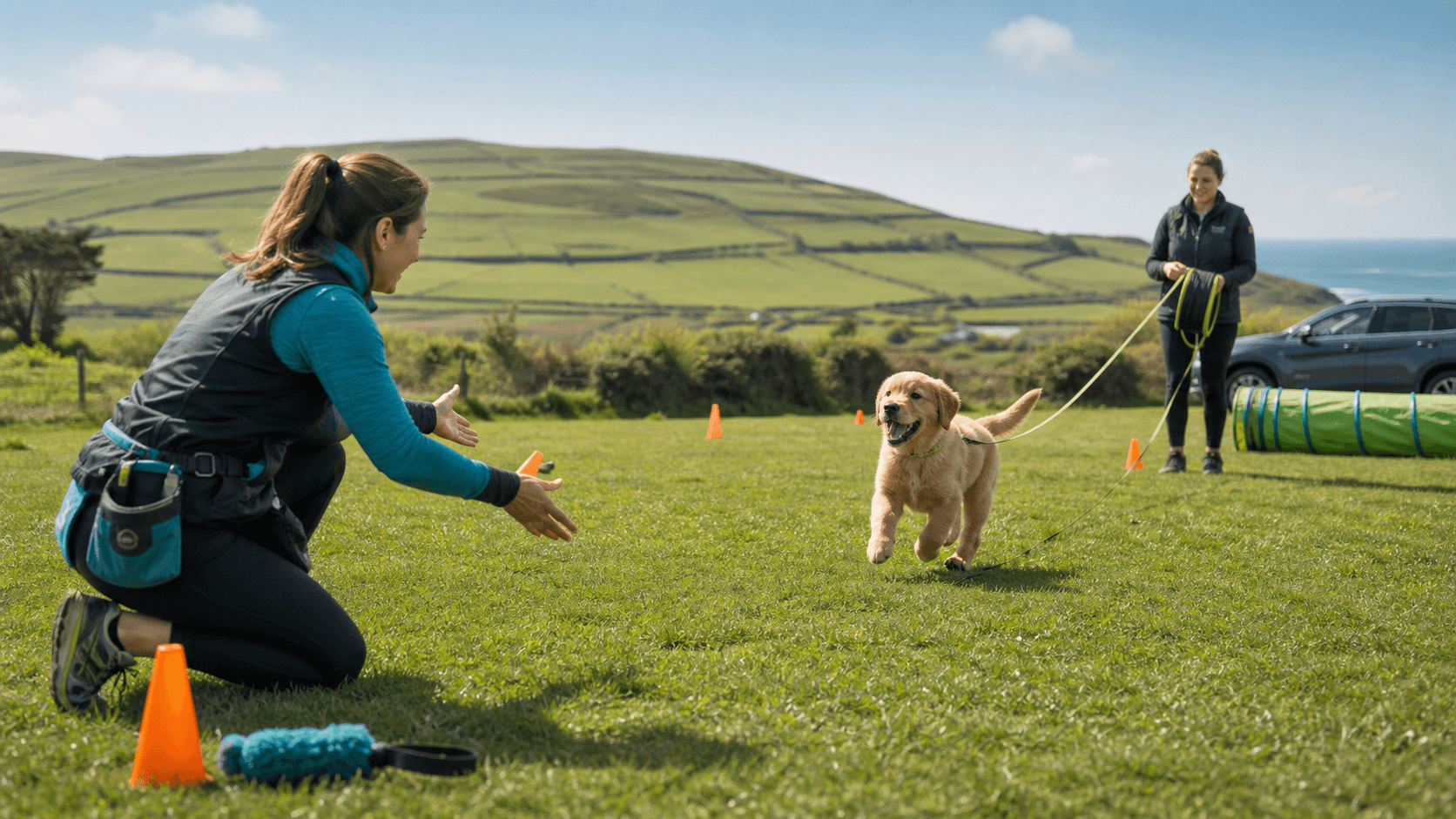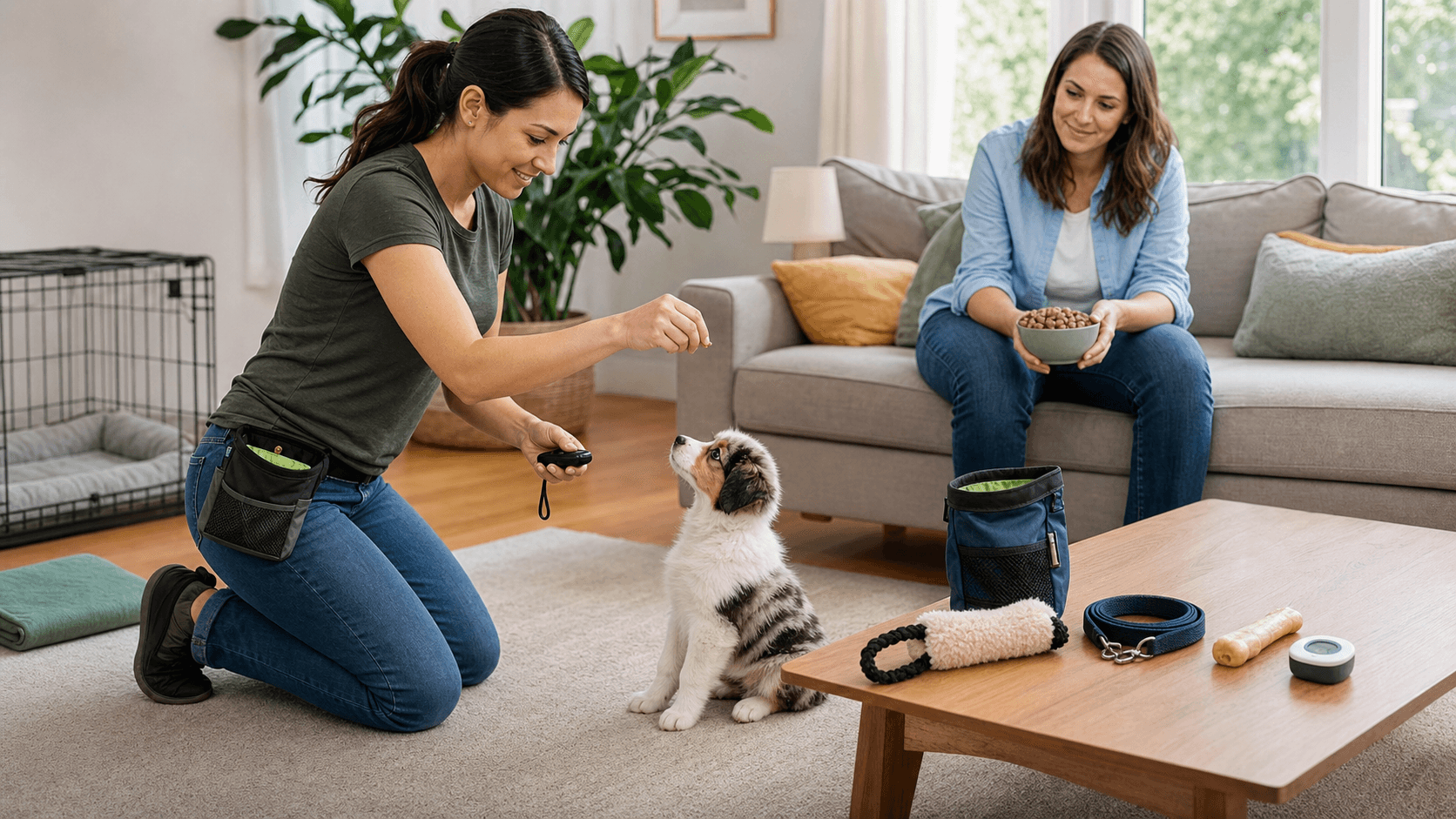
Calm, Focused Puppies During Life’s Busy Moments
Young puppies find normal daily life very exciting. The doorbell rings, someone pops in for a cuppa, children dash through the room, you pick up the lead, or you come home from a walk and your pup explodes into zoomies. All of this is normal, but it can quickly turn into jumping, mouthing, and barking.
This is where “switch-off” mini games come in. These are short, positive puppy dog training games that teach your pup how to relax, not just how to move more. Instead of only tiring the body, we are gently helping the brain slow down and feel safe.
When we build these skills early, we get long-term benefits like calmer greetings, smoother vet visits, safer handling, and easier mealtimes. At Paws Academy Dog Training, we focus on kind, reward-based methods and simple games that fit into real homes, from busy family kitchens to quiet cottages here in Mayo. Our online puppy club gives step-by-step help, so you are not practising on your own.
Setting Your Puppy up for Calm Success
Before we ask a puppy to focus, we need the basics in place. A very over-tired or under-exercised puppy will struggle to settle. Good foundations look like:
- Age-appropriate exercise, not long hikes
- Lots of sleep through the day
- Enrichment like sniffing games, chewing, and licking
- A routine that is steady enough that your pup can predict what comes next
To “prime” a calm learning space, try:
- Using a lead, puppy pen, or baby gate to keep your pup close but not underfoot
- Practising at a time of day when they are not at their wildest
- Using soft, easy-to-eat treats and a gentle voice
- Keeping background noise low when you can
Training sessions can be tiny, just 1 to 3 minutes at a time. Stop while your puppy is still keen so they think, “That was fun, I would do that again.” First, teach each game when life is quiet. Then slowly begin to use it during real triggers like the doorbell, dinner prep, or after a walk, so your puppy can actually cope.
Teaching a Relaxing Settle on the Mat
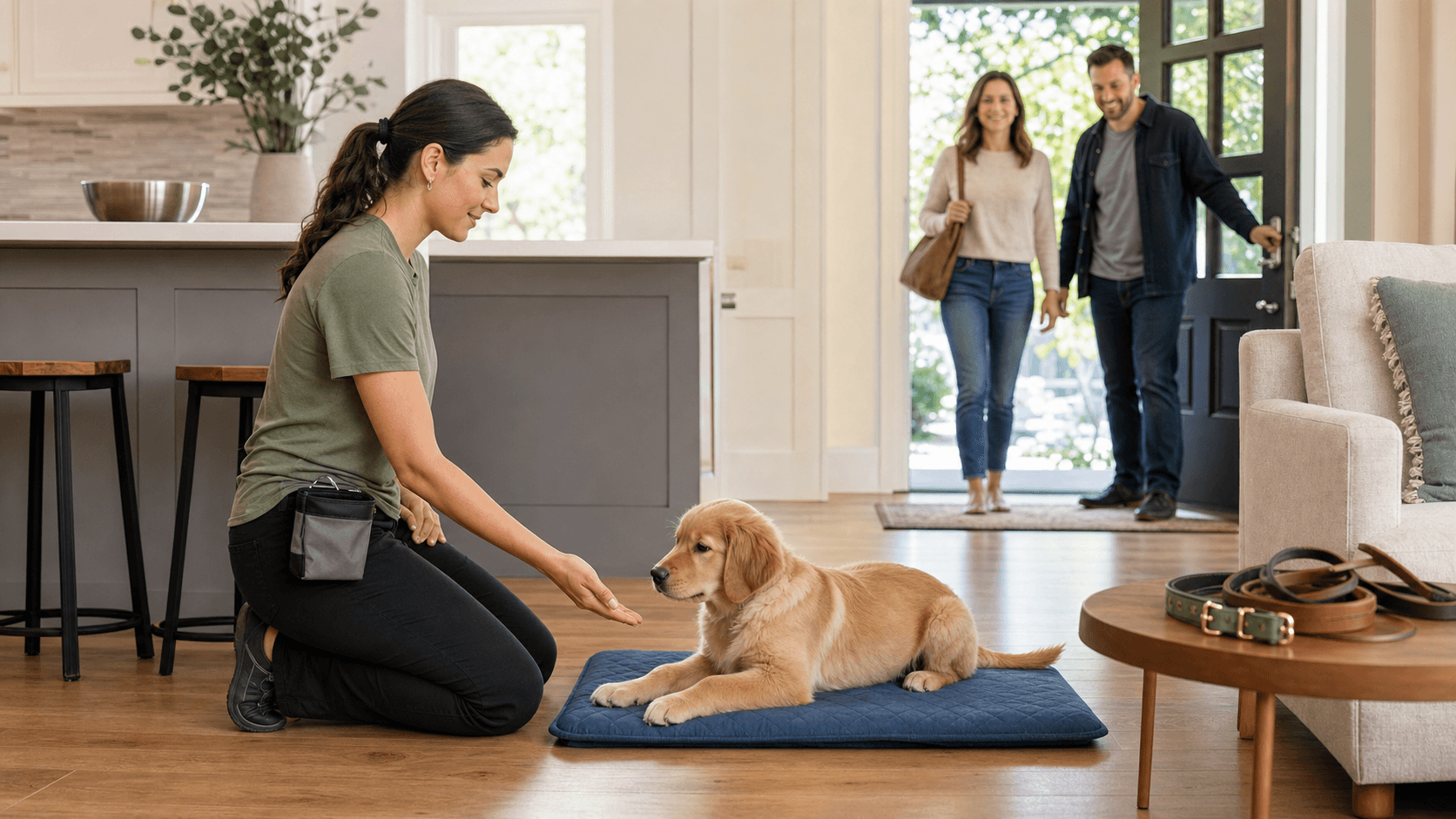
A mat or small blanket can become your puppy’s “relax here” spot. Because it is portable, you can use it in many places: next to the table during meals, beside your chair during a Zoom call, outdoors when friends visit the garden in spring and summer, or in the vet waiting area.
Teach it in simple steps:
- Lay the mat down and reward any interest at all: looking at it, stepping on it, sniffing it.
- Next, wait for your puppy to offer a sit or lie on the mat, then calmly reward.
- Build up a few seconds of staying there, feeding slow treats down between their front paws.
- Start to move a little around the room while they remain on the mat, returning to drop a quiet treat.
For longer settles, you can give a soft chew on the mat. Then link the mat to everyday life. For example:
- Put the mat down at a comfortable distance while you prepare dinner
- Use it while you make a cup of tea or read on the sofa
- Bring it out before guests arrive so it feels familiar
Try not to:
- Lure too much with food so the puppy only follows the treat, not the idea
- Expect long, perfect settles too early
- Only bring the mat out when your puppy is already very excited
Inside our online puppy club, we break this down into easy steps with video guidance, so you can see what each stage should look like.
Handling Games for Safer Everyday Care
Cooperative handling makes everyday care kinder for both of you. We want lead clipping, putting the harness on and taking it off, wiping muddy paws after wet Irish walks, and towel drying after rain to feel safe, not worrying.
A simple collar grab game helps a lot:
- Lightly touch your puppy’s collar, then feed a treat.
- Repeat until they brighten up when your hand moves towards the collar.
- Slowly build to a gentle hold, then treat, so your hand near the collar always predicts something good.
A chin rest is another calming skill. Your puppy learns to rest their chin on your hand, thigh, or a small cushion. While their chin is resting, you quietly drop treats. This position is handy for:
- Grooming
- Vet checks
- Quiet cuddles on the sofa
- Looking at eyes, ears, or teeth
Pair these with a hand target. Hand targeting simply means your puppy boops your hand with their nose. It is great for turning their focus back to you when they feel unsure, for example:
- Guests reaching to say hello
- Children moving around the room
- Passing other dogs or people on walks
These handling games are core parts of thoughtful puppy dog training and give your pup a voice. Our online puppy club offers clear progressions and ideas for puppies who are a bit worried about being touched.
Pattern Games to Take the Edge Off Excitement
Pattern games are simple little movement and treat patterns your puppy can learn by heart. Because they are so predictable, they help puppies feel safer. When life is busy, your pup can drop into a known pattern instead of rehearsing jumping, nipping, or barking.
A few useful pattern games are:
- 1, 2, 3 Game: Say “1, 2, 3” out loud, then on “3” place a treat on the floor by your foot. Once your pup understands, you can start this game as someone enters the room, so the sight of a person links with “1, 2, 3, treat.”
- Middle Position Pattern: Lure your pup to slip between your legs from behind or to sit snugly beside you, treat, then release them back out. Repeat gently. This becomes a safe “home base” close to you.
- Side-to-side floor treats: Stand still and calmly toss a treat to your left, then one to your right, in a slow rhythm. Your puppy gets to sniff, turn, and move their body in a smooth way, which often takes the sting out of excitement.
These games are short, fun, and easy to slot into daily life, especially when walks, visitors, and outdoor activities pick up in spring and early summer.
Bringing It Together With Real-Life Triggers
Now we blend the games into small “calm routines” for the moments that usually cause trouble.
For guests arriving, you might:
- Use a hand target to move your puppy away from the door
- Cue a settle on their mat with a chew as people come in
- Once everyone is seated, play a gentle pattern game nearby
For meals, try:
- A tiny pattern game before you put the bowl down, so your puppy is already listening
- Then a settle on the mat with a safe chew while the family eats
For lead clipping and post-walk zoomies:
- Practise the collar grab game and chin rest so lead on and off are slow and calm
- After a walk, do a short pattern game or a calm sniffy scatter feed on the floor to help your puppy ease from outdoor excitement to indoor rest
It can help to keep short notes or videos of what works best for your dog. You can then slowly adjust distance, duration, and difficulty for your individual puppy. These skills grow with your dog into adolescence and beyond. The earlier you build them in a kind, steady way, the more reliable they become as your puppy matures.
Give Your Puppy The Best Start Today
If you are ready to build good habits from day one, our puppy dog training programmes at Paws Academy Dog Training are designed to fit smoothly into family life. We focus on clear guidance, kind methods and practical skills you can use every day. Whether you want help with socialisation, confidence or basic manners, we are here to support you and your puppy. If you have any questions or would like more details, contact us.
Frequently Asked Questions
- What are puppy “switch-off” games and how do they help with overarousal?
- Switch-off games are short, reward-based mini-games that teach a puppy to relax and focus during exciting moments. They help reduce jumping, mouthing, and barking by helping the puppy’s brain slow down and feel safe. Used regularly, they build long-term skills like calmer greetings and easier handling.
- How do I teach my puppy to settle on a mat when guests arrive or during meals?
- Start in a quiet moment by rewarding your puppy for looking at, sniffing, or stepping on the mat, then reward a sit or lie down on it. Build duration by feeding calm treats between their front paws and briefly moving around while they stay put. Once the mat is familiar, put it down before triggers like dinner prep or guests so the settle starts early.
- How long should puppy focus games take, and how often should I practice them?
- Keep sessions very short, about 1 to 3 minutes, and stop while your puppy is still engaged. Practice when life is calm first, then gradually use the same game during real triggers like the doorbell, leash clipping, or post-walk zoomies. Short, frequent practice tends to work better than long sessions.
- What is the collar grab game and why is it useful for leash clipping and handling?
- The collar grab game teaches your puppy that a hand reaching for their collar predicts something good, like a treat. You lightly touch the collar, treat, and slowly build up to a gentle hold, treat. This helps leash clipping, harnessing, and everyday handling feel safer and less stressful.
- What is the difference between a settle on a mat and a chin rest for calming a puppy?
- A settle on a mat teaches your puppy to relax in a specific spot, which is useful during meals, visitors, or when you need them to stay out from underfoot. A chin rest teaches calm, cooperative handling by having the puppy rest their chin on your hand, thigh, or a cushion. Both build calm, but one is about staying settled in place and the other is about staying relaxed during touch and care.