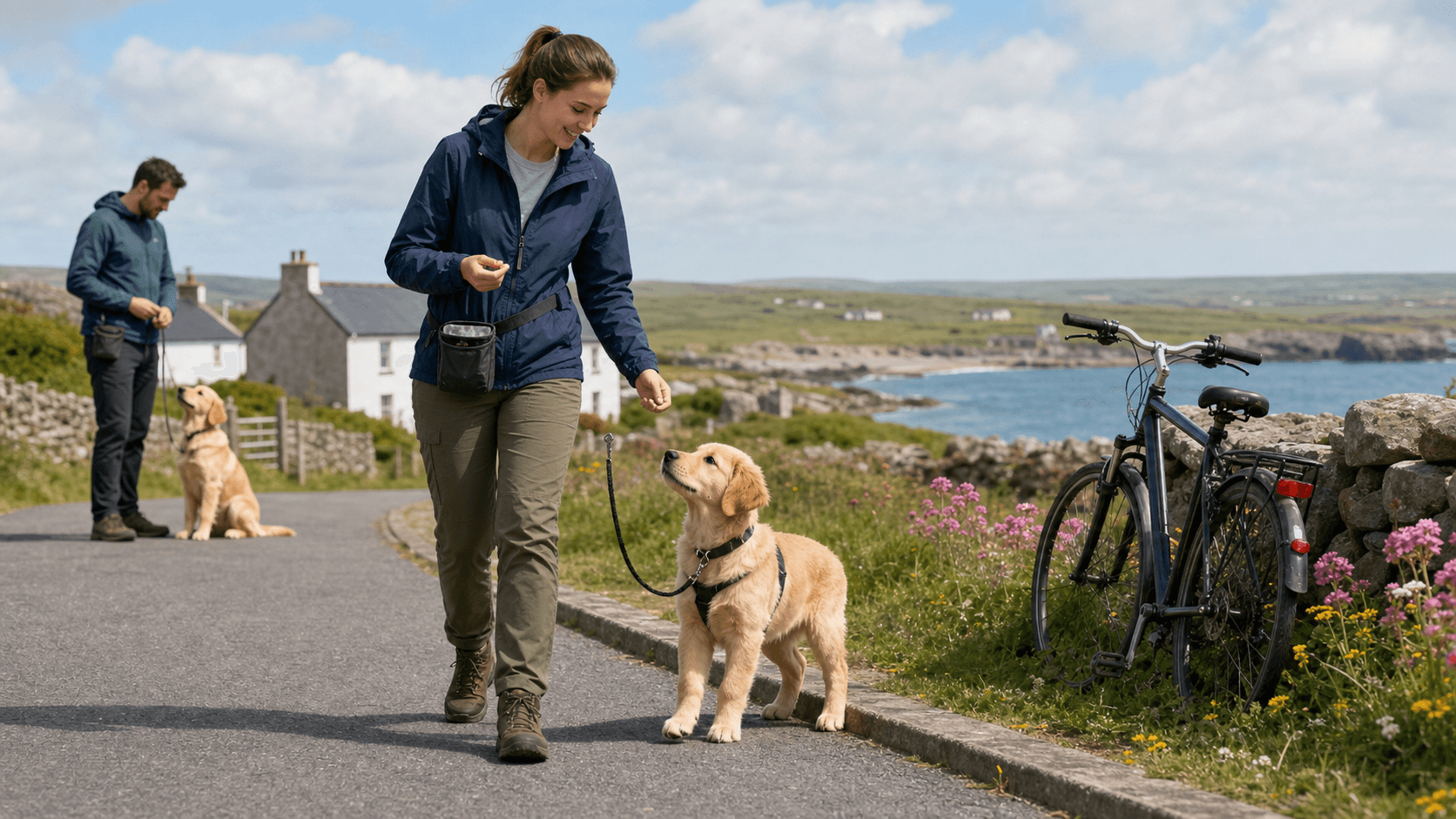
Turn Your Daily Walk Into a Puppy Training School
Every walk with your puppy can double as a little training class. You do not need extra hours in the day, fancy equipment, or a perfect schedule. You just need to use the time you are already out on the path, pavement, or beach and turn it into short, helpful lessons.
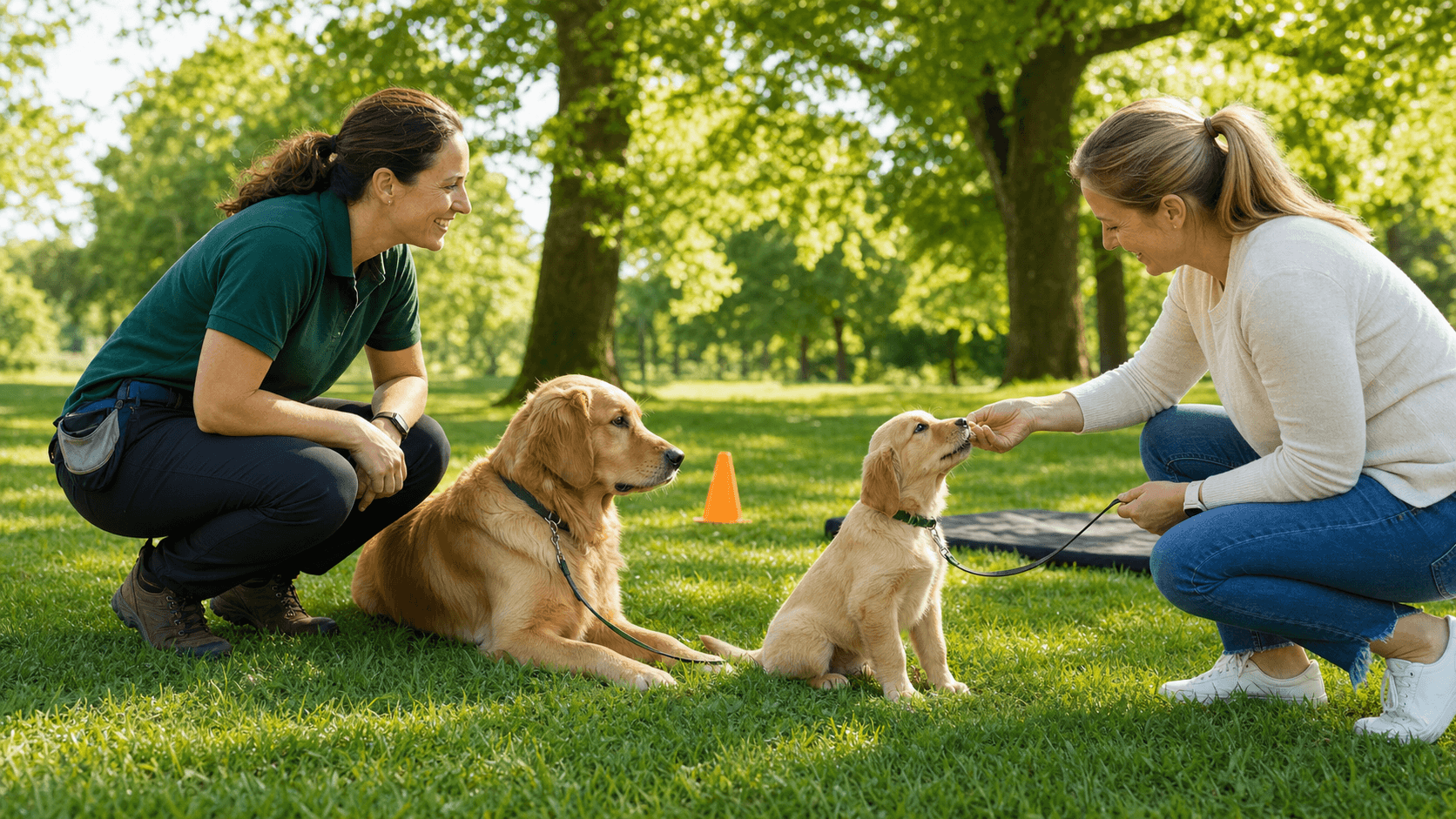
Spring is a lovely time for this. The evenings are brighter, more people and dogs are outside, and there are new sights and smells everywhere. That can feel busy for a young dog, but it is also the perfect chance to build calm habits, confidence, and focus in real life. Puppy dog training on walks is not about getting everything right. It is about tiny, fun moments repeated often so your pup learns what works.
At Paws Academy Dog Training, we love helping people use normal life with their dogs as training time. When you know what to do on those everyday walks, each step can support your puppy’s brain, body, and behaviour.
Calm Starts at the Front Door
The walk actually starts before you touch the front gate. The way your puppy leaves the house sets the mood for everything that follows. If they blast out of the door like a rocket, it is much harder to get their attention later. If they start calmly, they can listen and learn.
Try turning the front door into a little two-minute lesson:
- Practise a simple “wait” at the door
- Clip the lead on and off indoors while your puppy is calm
- Ask for a “sit” before you open the door
Stand by the closed door with your puppy on lead. Put your hand on the handle. If your puppy rushes or jumps, pause. When their paws are still, say “yes” or give a small treat. Then open the door a little. If they try to dash out, gently close it again. You are teaching that still paws make the door open.
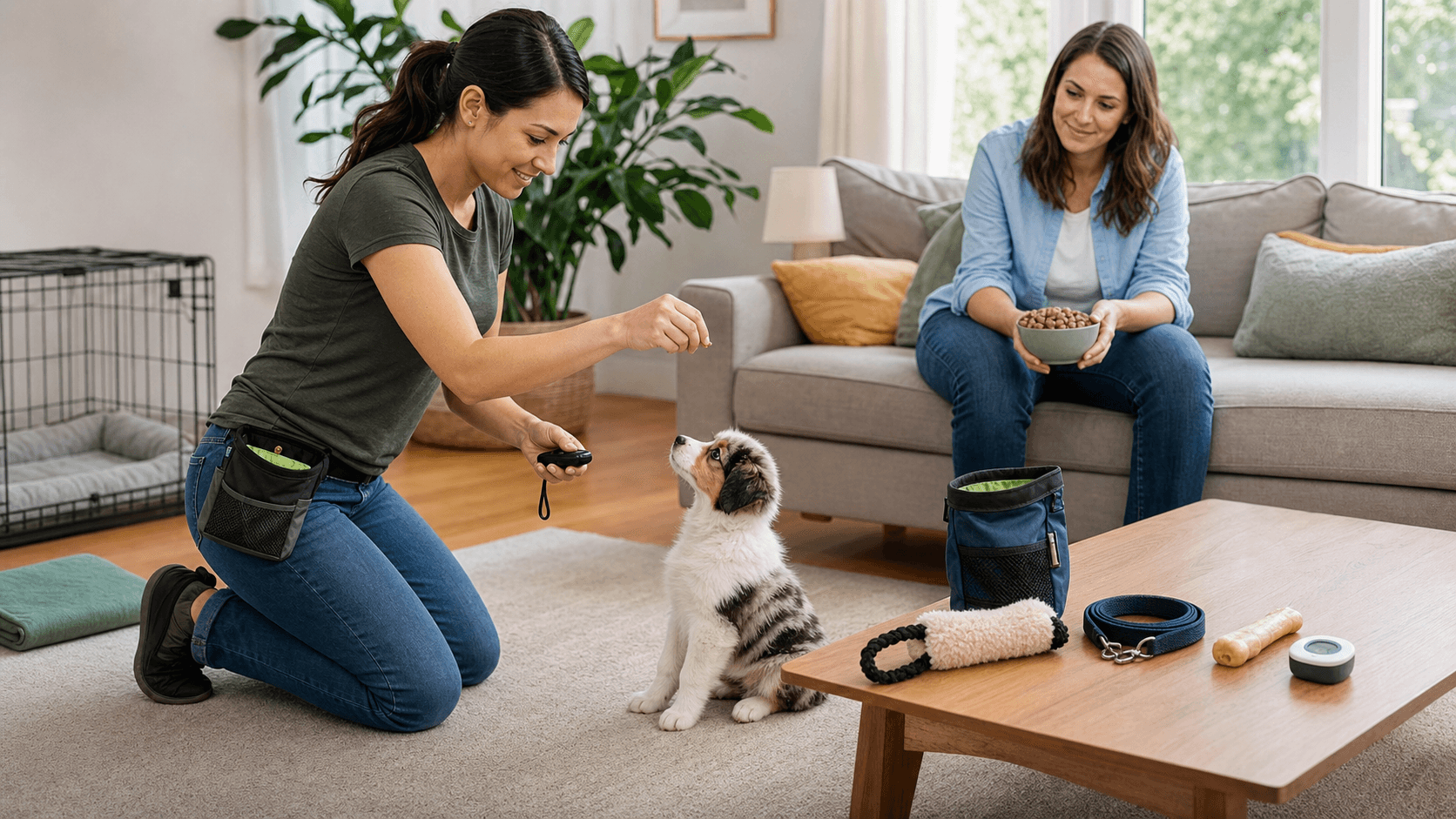
You can also take the excitement out of the lead. Inside the house, clip the lead on, feed a treat, then take it off again. Repeat a few times at quiet moments. This helps your puppy learn that the lead is just part of normal life, not a signal to explode with energy.
A quick “sit” before stepping outside is another simple habit. Ask for a sit, reward, open the door, then say a clear “OK” or “let’s go” to release them. Over time, this builds self-control and makes later loose-lead work so much easier.
Turning Sniffing Time Into Learning Time
Many people feel a bit annoyed when their puppy stops every two steps to sniff. Actually, sniffing is a big part of puppy dog training. It helps lower arousal levels and lets your puppy process what is happening around them. A relaxed nose often means a relaxed brain.
Instead of fighting the nose, work with it:
- Use “go sniff” as a reward
- Practise quick name check-ins
- Play simple “find it” scent games
As you walk, any time your puppy manages a few nice loose-lead steps, calmly say “go sniff” and move with them to a patch of grass or an interesting spot. This teaches your puppy that staying with you and walking nicely opens the door to the good smells.
Next, add tiny check-ins. When your puppy is sniffing, gently say their name. The moment they flick their eyes to you, say “yes” and either give a treat or say “go sniff” again and let them return to the scent. They learn that looking back at you pays well and you do not have to use food every single time.
You can also scatter three or four tiny treats in the grass and say “find it”. Let your puppy sniff them out. In spring, with all the fresh smells of grass, soil, and wildlife, this can be very rich and calming. Just pick safe, clean areas and keep an eye on what they are putting in their mouth.
Loose Lead Skills on Real Streets and Paths
Loose-lead walking is one of the biggest wishes people have for their dogs. The best place to teach it is often the same place you struggle with it: normal streets, lanes, and paths. Short, focused bursts on your usual route work better than one big “training walk”.
Try these mini-lessons on quieter parts of your walk:
- “Stop and soften” when the lead goes tight
- “One step success” to build good habits
- Fun changes of direction to keep attention
With “stop and soften”, the rule is simple: tight lead means we stop. The moment your puppy eases the pressure by turning back or stepping closer, you calmly move forward again and reward. No yanking or scolding. The ground itself is the reward for staying near you.
For “one step success”, start by taking just a single slow step. If the lead stays loose and your puppy is roughly beside you, say “yes” and give a treat. Then try two steps, then three. If it falls apart, go back to one step. Keeping it very easy at the start helps your puppy understand what you want.
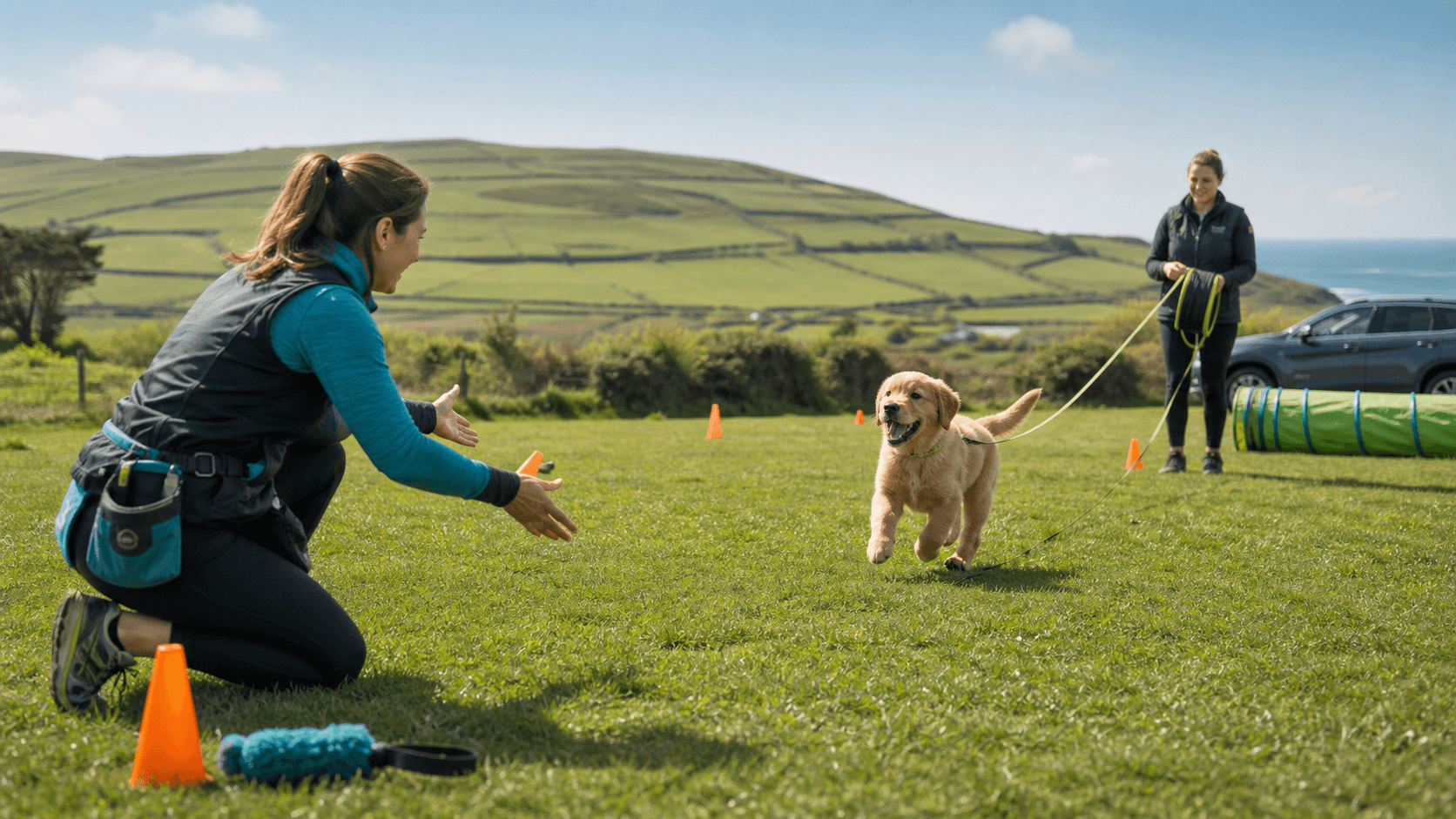
On quiet stretches, gently change direction every so often. Turn left, right, or make a little loop, and reward your puppy for following you. They soon learn that staying tuned in makes the walk more interesting, and you are worth watching even when there are birds, puddles, and cyclists.
Meeting People and Dogs with Good Manners
Early greeting habits can shape your dog’s social skills for life. In spring, with more people and dogs out, your puppy has lots of chances to practise. That can be helpful or it can build pulling, jumping, and frustration if it is not guided.
You can keep things safe and polite with a few simple rules:
- Sit to say hello to people
- “Look at that” for other dogs
- Use distance as your friend
For people, start a “sit to say hello” rule. As someone approaches, ask your puppy to sit. Reward the sit. If they stay seated and calm, allow a short greeting. If they jump, gently move your puppy away and try again later. The message is clear: paws on the ground make good things happen.
With other dogs, not every meeting has to be nose-to-nose. When your puppy spots a dog at a distance, say “look at that”. When they glance at the dog, then back at you, reward. You are not asking them to ignore every dog, just to check in with you and not stare or lunge.
If your puppy is too excited or worried, increase the space. Cross the road, step into a driveway, or move behind a parked car. Distance makes it easier for your puppy to stay calm and learn. It is perfectly fine if they do not greet every dog or person they see. In fact, that can make walks feel much easier for both of you.
Ending the Walk so Good Habits Stick
The last few minutes of the walk matter just as much as the start. They shape how your puppy feels about coming home and settling. If the walk ends with a big wrestle at the door, your puppy is learning to wind up, not wind down.
Try this simple end-of-walk pattern:
- Slow your pace and add easy cues
- Reward calm coming inside and settling
- Make a quick note of wins and wobbles
About five minutes from home, start walking a little slower. Ask for a few sits, a touch to your hand, or a tiny “find it” game with a couple of treats on the grass. You are helping your puppy shift from busy outdoor brain to calmer indoor brain.
When you reach the door, reward your puppy for coming inside, letting you wipe paws, and settling on a mat or bed. A chew, a stuffed toy, or a short scatter of kibble on their bed can make “home time” feel like a good ending, not a loss.
After you have dried off and had a cup of tea, take a brief note, even just in your phone. Ask yourself: what went well, and what was tricky? Maybe the greeting with a jogger was great, but bikes were hard. Next walk, you can pick one of those points to focus on. Step by step, every walk becomes part of a clear puppy dog training plan, not just a walk around the block.
At Paws Academy Dog Training here in the Westport and Ballycroy area and through our online puppy club worldwide, we build these everyday walk games into simple, friendly training support. With the right ideas in your pocket, each spring walk can gently shape your puppy into a calmer, more confident companion.
Help Your Puppy Grow Into A Confident, Well-Behaved Dog
If you are ready to put consistent, kind training into action, we can guide you every step of the way. Our tailored puppy dog training programmes at Paws Academy Dog Training are designed to fit real family life and everyday routines. Whether you want to get ahead of problem behaviours or build on the progress you have already made, we are here to support you. If you would like to talk through your puppy’s needs, simply contact us.
Frequently Asked Questions
- How can I turn my daily puppy walk into training without adding extra time?
- Use short, repeatable lessons during the walk you already take, like a quick wait at the door, a name check-in while sniffing, or a few steps of loose lead practice. Small moments repeated often build calm habits, confidence, and focus in real-life settings.
- How do I stop my puppy from dashing out the front door when we go for a walk?
- Put your puppy on lead, place your hand on the door handle, and only open the door when all paws are still. If they rush forward, gently close the door and try again, so they learn that calm behavior makes the door open.
- Is it okay to let my puppy sniff on walks, or does it ruin training?
- Sniffing is useful because it helps lower arousal and supports a calmer mindset. You can use a cue like "go sniff" as a reward for a few loose lead steps or for checking in with you.
- What is loose lead walking, and how do I start teaching it on normal streets?
- Loose lead walking means your puppy walks with you without pulling so the lead stays relaxed. Practice in short bursts on quieter parts of your route, and when the lead goes tight, stop and wait for it to soften before moving again.
- What is the difference between using treats and using sniffing as a reward on a puppy walk?
- Treats are fast and easy to deliver for specific moments like a sit or a quick check-in. Sniffing is a natural reward that can be just as powerful, and it often helps your puppy relax while still reinforcing good walking behavior.